
Short answer. Vapour pressure deficit (VPD) is the gap between how much water vapour the air inside a leaf holds (saturated, at leaf temperature) and how much the room air actually holds, in kilopascals (kPa). It sets the "pull" on transpiration. Common working targets are 0.4–0.8 kPa for seedlings and clones, 0.8–1.2 kPa in veg, 1.0–1.5 kPa in flower, calculated with leaf temperature. Treat those bands as Grower practice backed by general plant physiology, not as cannabis-proven optima.
What's happening
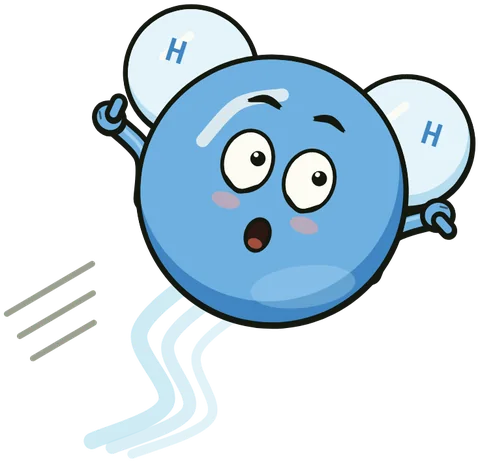
The air spaces inside a leaf are effectively at 100 % RH at the leaf's own temperature. Water moves from high vapour pressure (leaf) to low (room). The bigger the difference, the faster the plant transpires, and the faster water, calcium and other mass-flow nutrients move from root to shoot.
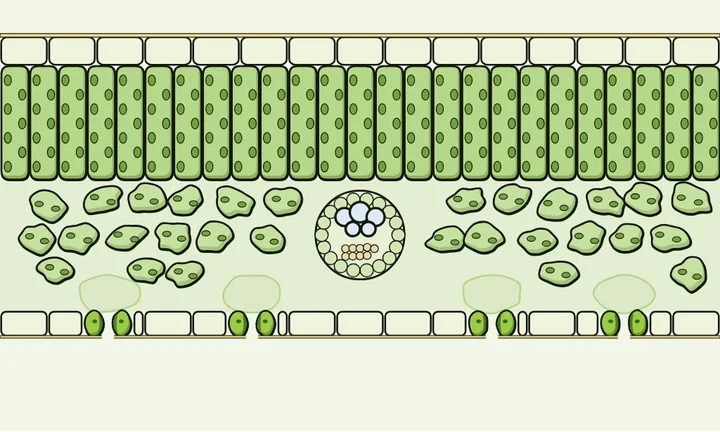 Inside the leaf≈100 % RHAir spaces are saturated at the leaf's own temperature
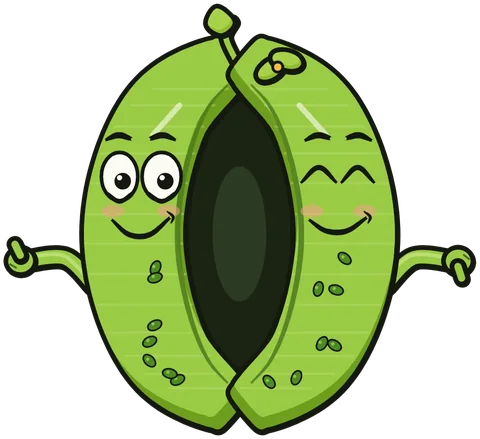 Through the open stomaSto and Ma, the guard cells, hold the pore open
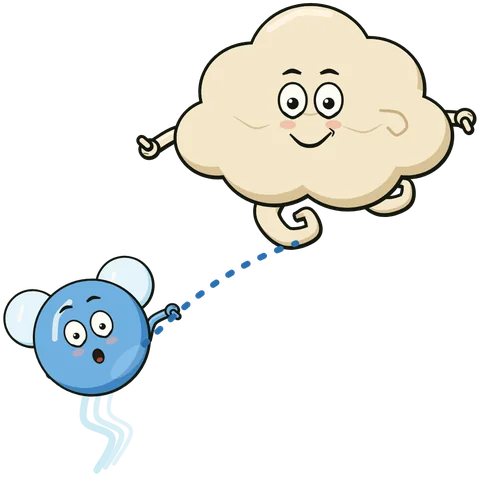 Into the room aire.g. 60 % RHDrier air holds less vapour than the leaf
- The gap is the VPDkPaBigger gap, faster transpiration
Source: FAO-56 [1]

Too low (wet air)
Below ~0.4 kPa outside propagation
- −Transpiration stalls; calcium delivery to new growth and buds slows.
- −Leaf surfaces stay wet, and fungal pathogens such as Botrytis and powdery mildew get their favourite conditions [5].
- −A 2025 study held cannabis at roughly 78–98 % RH and found delayed flowering, lower biomass and lower cannabinoid content compared with roughly 37–58 % RH [3].
Too high (dry air)
Above ~1.6–1.8 kPa
- −Stomata partially close to save water, so CO₂ intake drops and photosynthesis falls even though the light is on.
- −Leaves taco and edges crisp.
- −The root zone has to work harder to keep up.
RH alone is a poor control target because the same 60 % RH means a very different pull at 20 °C than at 30 °C. VPD folds temperature and humidity into one number.
The calculation
Saturation vapour pressure (kPa) at temperature T (°C), using the FAO-56 form of the Tetens equation [1]:
es(T) = 0.6108 × exp(17.27 × T / (T + 237.3))
- Air VPD = es(T_air) × (1 − RH/100)
- Leaf VPD = es(T_leaf) − es(T_air) × RH/100
Leaf VPD is what the plant feels. Measure leaf temperature with an infrared thermometer on a top, fully lit leaf (set emissivity around 0.95), or read it from a canopy IR sensor.
How far is the leaf from the air?
Well-watered leaves usually sit within about 2 °C (3.6 °F) of air temperature under any light source; under water stress and still air the model in [2] puts leaves 8 °C (14 °F) above air under LED and 12 °C (22 °F) above under HPS. In practice:
| Situation | Typical leaf offset vs air | Notes |
|---|---|---|
| LED, healthy transpiring canopy, decent airflow | about −2 to +1 °C | Below air at moderate light, dry air or strong airflow; the model put an LED leaf about +0.8 °C at 1,000 µmol/m²/s, 50 % RH, 1 m/s air [2]. Measure your own. |
| HPS / double-ended HID | about 0 to +3 °C | Radiant load: about 1.3 °C warmer than LED at the same light [2]. |
| Water-stressed or still air, any light | +2 to +8 °C or more | Stomata closed; the leaf can't cool itself [2]. |
[2] is an energy-balance model of non-cannabis leaves (tomato, pepper, basil, broccoli) with defaults of 25 °C, 50 % RH, 1 m/s air and 1,000 µmol/m²/s; we found no measured cannabis canopy survey. The −2 °C offset used in the tables below is an example, not a typical LED value: measure your own.
Numbers that matter
- Too wet
- Seedlings and clones
- Veg, early flower
- Late flower
- Too dry
Zone edges at 0.4, 0.8, 1.2 and 1.6 kPa follow the working targets below; real stage bands overlap (flower weeks 1–5 run 1.0–1.4 kPa).
Source: Calculated with the FAO-56 equation [1], leaf 2 °C below air (an example offset; measure yours); the table below has the same numbers.
Show the numbers
| Air temperature (°C) (values in kPa) | 40 % | 50 % | 55 % | 60 % | 65 % | 70 % | 75 % | 80 % |
|---|---|---|---|---|---|---|---|---|
| 20 °C (68 °F) | 1.13 | 0.89 | 0.78 | 0.66 | 0.54 | 0.43 | 0.31 | 0.19 |
| 22 °C (72 °F) | 1.28 | 1.02 | 0.88 | 0.75 | 0.62 | 0.49 | 0.36 | 0.22 |
| 24 °C (75 °F) | 1.45 | 1.15 | 1.00 | 0.85 | 0.70 | 0.56 | 0.41 | 0.26 |
| 26 °C (79 °F) | 1.64 | 1.30 | 1.14 | 0.97 | 0.80 | 0.63 | 0.46 | 0.29 |
| 28 °C (82 °F) | 1.85 | 1.47 | 1.28 | 1.09 | 0.90 | 0.72 | 0.53 | 0.34 |
| 30 °C (86 °F) | 2.08 | 1.66 | 1.45 | 1.23 | 1.02 | 0.81 | 0.60 | 0.39 |
Leaf VPD (kPa) with a −2 °C leaf offset (example; measure yours)
| Air °C (°F) | 40 % | 50 % | 55 % | 60 % | 65 % | 70 % | 75 % | 80 % RH |
|---|---|---|---|---|---|---|---|---|
| 20 (68) | 1.13 | 0.89 | 0.78 | 0.66 | 0.54 | 0.43 | 0.31 | 0.19 |
| 22 (72) | 1.28 | 1.02 | 0.88 | 0.75 | 0.62 | 0.49 | 0.36 | 0.22 |
| 24 (75) | 1.45 | 1.15 | 1.00 | 0.85 | 0.70 | 0.56 | 0.41 | 0.26 |
| 26 (79) | 1.64 | 1.30 | 1.14 | 0.97 | 0.80 | 0.63 | 0.46 | 0.29 |
| 28 (82) | 1.85 | 1.47 | 1.28 | 1.09 | 0.90 | 0.72 | 0.53 | 0.34 |
| 30 (86) | 2.08 | 1.66 | 1.45 | 1.23 | 1.02 | 0.81 | 0.60 | 0.39 |
Leaf VPD (kPa) with no offset (leaf = air; typical HID room)
| Air °C (°F) | 40 % | 50 % | 55 % | 60 % | 65 % | 70 % | 75 % | 80 % RH |
|---|---|---|---|---|---|---|---|---|
| 20 (68) | 1.40 | 1.17 | 1.05 | 0.94 | 0.82 | 0.70 | 0.58 | 0.47 |
| 22 (72) | 1.59 | 1.32 | 1.19 | 1.06 | 0.93 | 0.79 | 0.66 | 0.53 |
| 24 (75) | 1.79 | 1.49 | 1.34 | 1.19 | 1.04 | 0.90 | 0.75 | 0.60 |
| 26 (79) | 2.02 | 1.68 | 1.51 | 1.34 | 1.18 | 1.01 | 0.84 | 0.67 |
| 28 (82) | 2.27 | 1.89 | 1.70 | 1.51 | 1.32 | 1.13 | 0.94 | 0.76 |
| 30 (86) | 2.55 | 2.12 | 1.91 | 1.70 | 1.49 | 1.27 | 1.06 | 0.85 |
The difference between those two tables is the whole point: at 26 °C and 60 % RH, the "air VPD" app says 1.34 kPa, but a leaf reading two degrees below air is only at 0.97 kPa.
- 1.34 kPaAir VPD: what a phone app showsAssumes leaf = air
- 0.97 kPaLeaf VPD: what the plant actually feelsLeaf 2 °C cooler
- −2 °CExample leaf offset; measure your ownReal leaves: about −2 to +1 °C
Source: The two tables above, calculated with FAO-56 [1]; leaf offsets [2]
RH needed for a target leaf VPD (−2 °C leaf offset)
| Air °C (°F) | 0.6 kPa | 0.8 kPa | 1.0 kPa | 1.2 kPa | 1.4 kPa |
|---|---|---|---|---|---|
| 20 (68) | 63 % | 54 % | 46 % | 37 % | 28 % |
| 22 (72) | 66 % | 58 % | 51 % | 43 % | 35 % |
| 24 (75) | 68 % | 62 % | 55 % | 48 % | 42 % |
| 26 (79) | 71 % | 65 % | 59 % | 53 % | 47 % |
| 28 (82) | 73 % | 68 % | 62 % | 57 % | 52 % |
| 30 (86) | 75 % | 70 % | 66 % | 61 % | 56 % |
Working targets by stage
| Stage | Leaf VPD (kPa) | Typical air / RH that gets you there | Evidence |
|---|---|---|---|
| Germination, seedlings, unrooted clones | 0.4–0.8 | 22–26 °C (72–79 °F), 65–80 % RH (domes) | Grower practice; propagation horticulture |
| Early veg | 0.8–1.0 | 24–27 °C (75–81 °F), 60–70 % RH | Grower practice |
| Late veg | 0.9–1.2 | 24–28 °C (75–82 °F), 55–65 % RH | Grower practice |
| Flower weeks 1–5 | 1.0–1.4 | 24–27 °C (75–81 °F), 50–60 % RH | Grower practice |
| Flower weeks 6+ / ripening | 1.2–1.5 | 20–25 °C (68–77 °F), 40–50 % RH | Grower practice; disease-risk logic [5] |
| Lights-off (any stage) | Keep above ~0.5 and stay well above dew point | Raise dehumidification before lights-off | Supported (condensation physics) |
Source: Stage bands: grower practice (table above); humidity and disease risk [5].
Show the numbers
| Stage | Leaf VPD target (kPa) |
|---|---|
| Seedlings, clones | 0.4–0.8 |
| Early veg | 0.8–1.0 |
| Late veg | 0.9–1.2 |
| Flower weeks 1–5 | 1.0–1.4 |
| Flower week 6+ | 1.2–1.5 |
What to check first
- Is the sensor right? Cheap RH sensors drift 3–5 % RH. Check against a fresh two-point salt test (75 % with sodium chloride, 33 % with magnesium chloride) before you chase numbers.
- Where is the sensor? At canopy height, shaded from direct light, in moving air. A probe in the corner or on the floor reads a different room.
- What is the leaf actually doing? Shoot leaf temperature at the top of the canopy, mid-canopy and lower. Big spreads mean an airflow problem, not a VPD-setpoint problem (airflow).
- Is the root zone keeping up? A dry pot, cold or warm reservoir, or root disease looks exactly like "VPD too high". Rule it out before you add humidity.
How to fix it
- VPD too high (dry/hot): lower air temperature first if you are above ~28 °C (82 °F); then add humidity (humidifier on a controller, or fewer air exchanges). Raise the light slightly or dim 10–15 % if leaves are above air temperature.
- VPD too low (wet): dehumidify, then gently raise temperature, then increase air exchange if outside air is drier. In late flower dehumidify on the dark period too; that is when RH spikes.
- Big leaf-to-air gap: improve canopy airflow; thin dense interior leaves (defoliation).
How to confirm it worked
Leaves held flat and pointed slightly up, no tacoing, no droplets at lights-on; stable daily water use; new growth free of calcium-type spotting; no condensation on walls or buds at lights-off. Log leaf VPD for a week and check it stays inside your band for at least 80 % of lights-on hours.
Common mistakes
- Using air VPD from an app while running LEDs, then running the room too humid. Low leaf VPD slows calcium delivery to new growth, which is the real story behind the Myth that "LEDs need more Cal-Mag" (Cal-Mag).
- Chasing a single number all day. Plants tolerate excursions; sustained extremes are the problem.
- Dropping RH hard in early flower at the cost of temperature control. Stable is better than "perfect".
- Forgetting the night: lights-off RH spikes are where bud rot starts.
- Treating VPD as a cure-all. It won't fix a sick root zone.
Evidence
The physics (Tetens/FAO-56 equation, leaf vs air vapour pressure) is Established [1]. Leaf temperature behaviour under different light sources is Supported by modelling [2]. Cannabis-specific evidence is thin: one recent study shows very high RH (low VPD) harms flowering, biomass and cannabinoids [3], and humidity is Established as a driver of cannabis bud rot and mildew [5]. Gas-exchange work on cannabis shows stomatal conductance and photosynthesis are temperature- and light-dependent [4], but there is no published trial that pins an optimum VPD per stage. The stage bands above are Grower practice.