
Jardin Lumen Rail · modular LED lighting · early access
- Engineered · ready for tooling
- Reservations on Fund the Bay
- Generation 1 · G1-r01
One bar. Two rails. Any light you need.
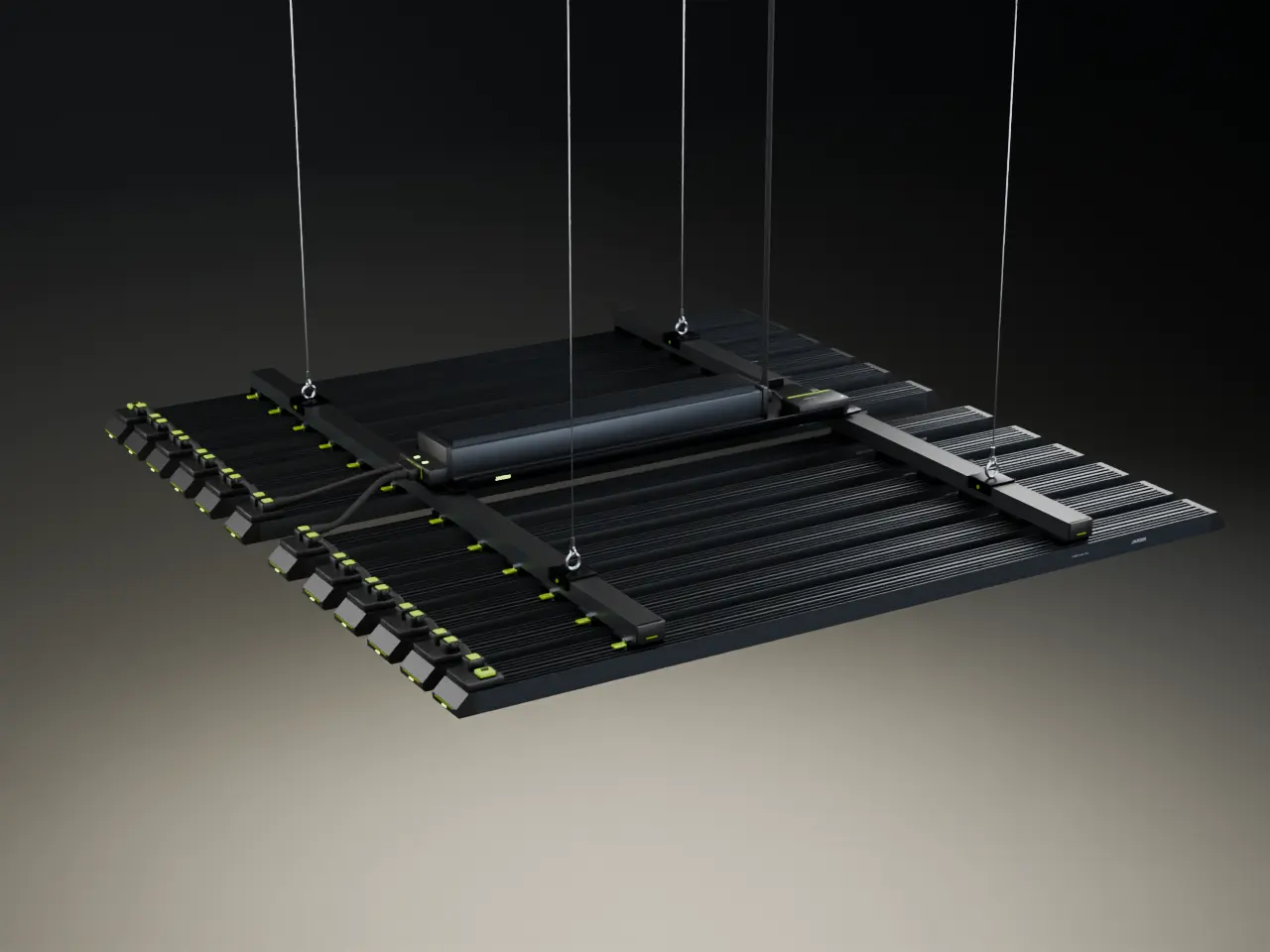
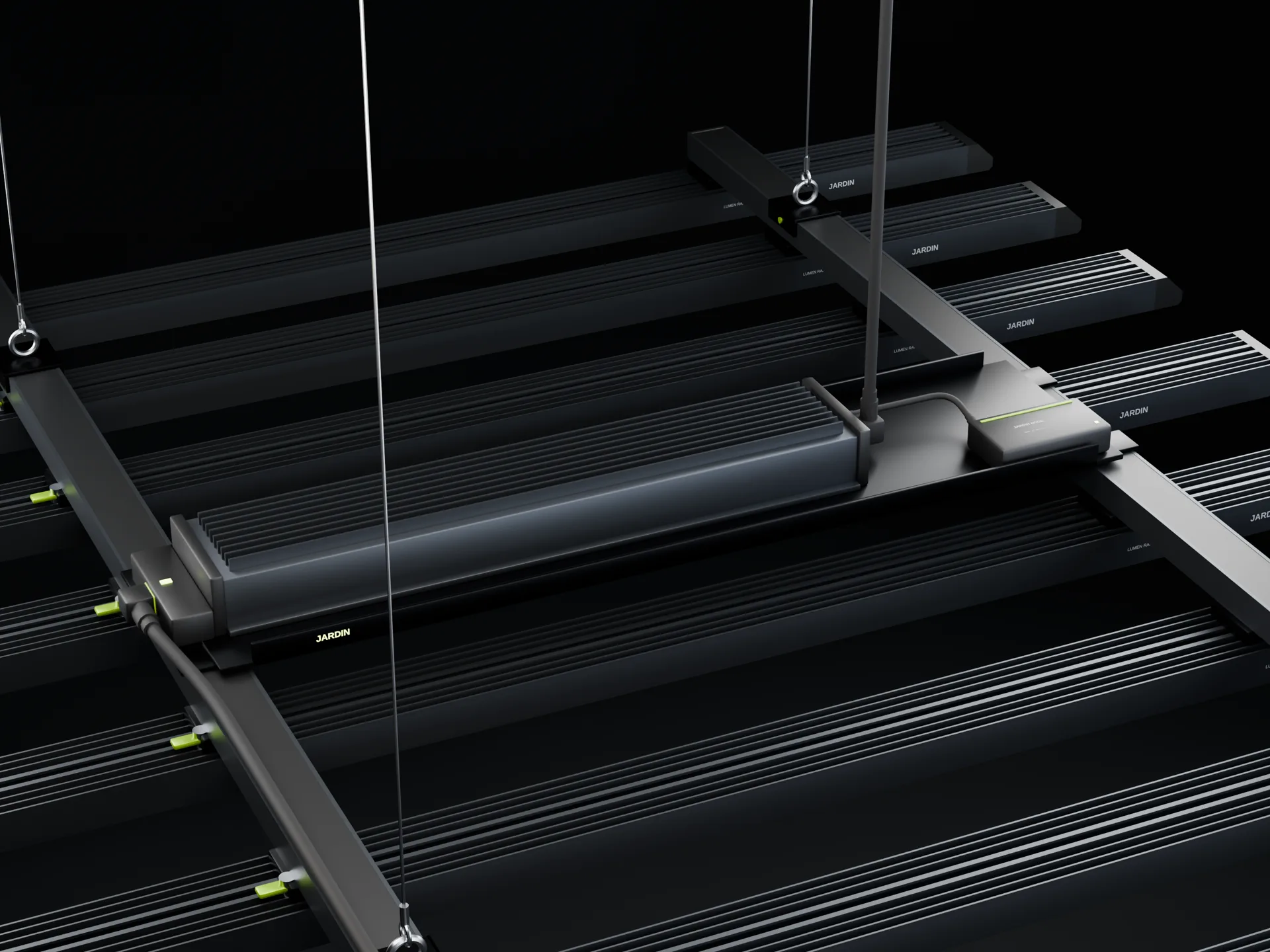
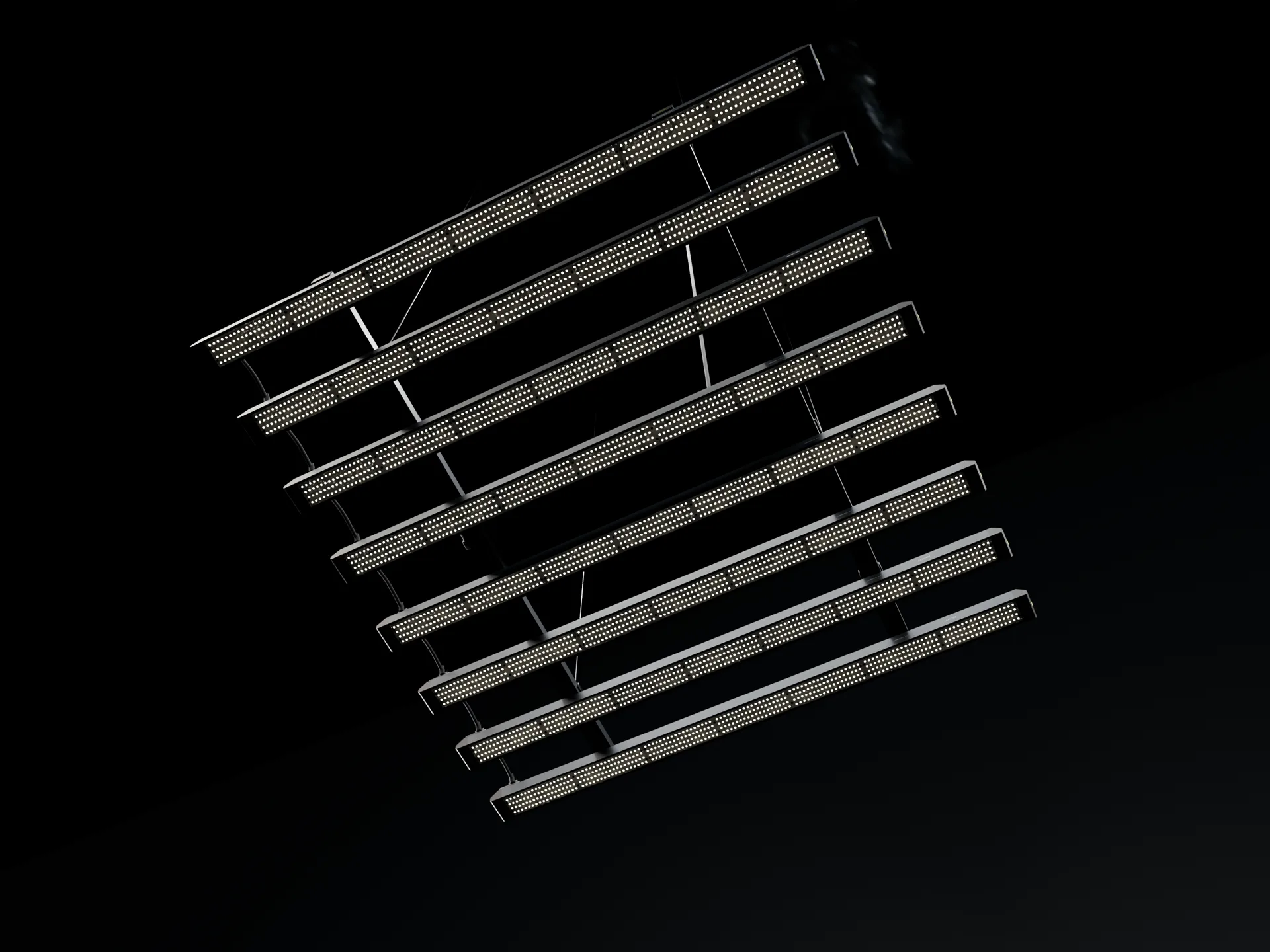
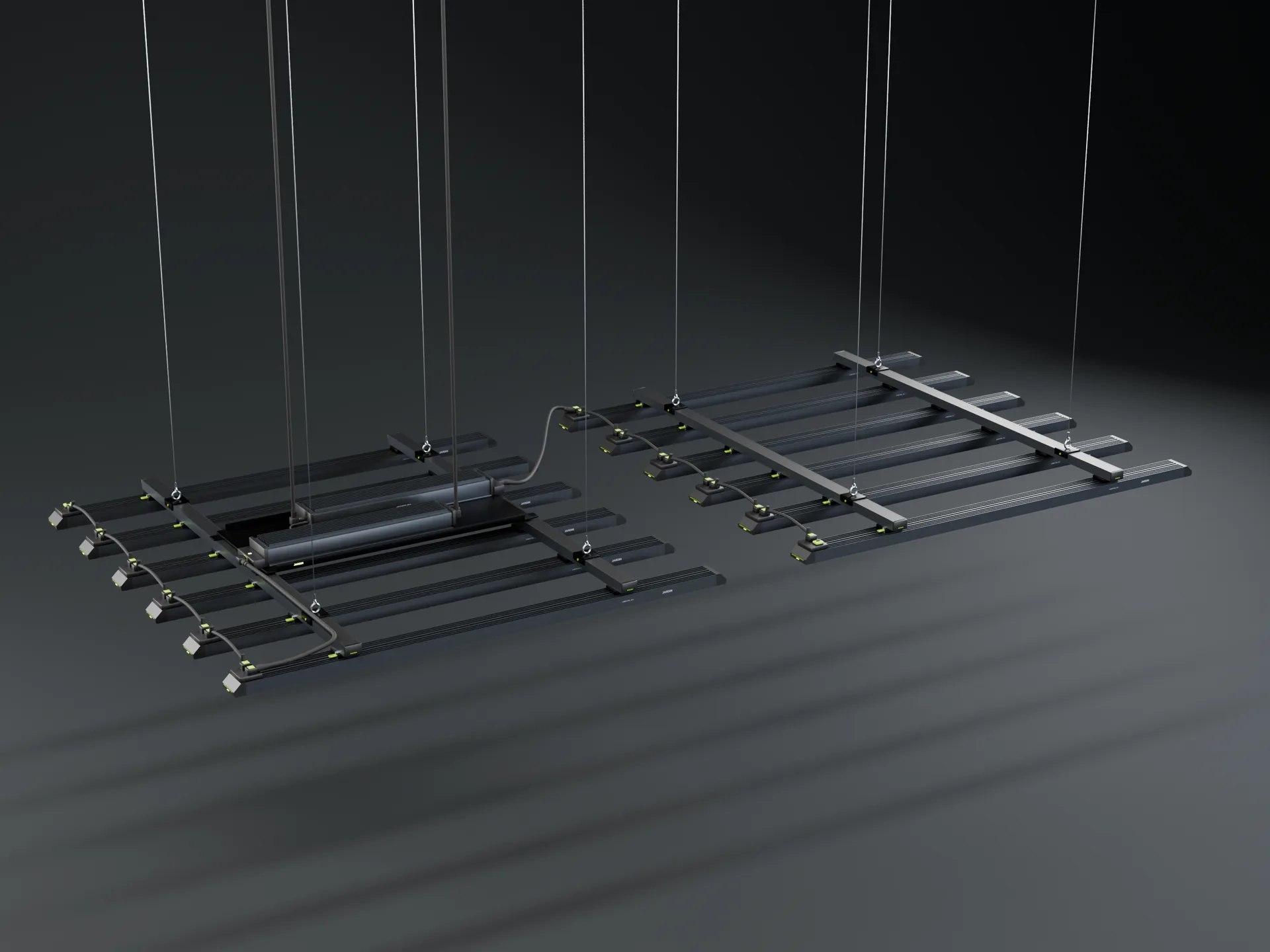
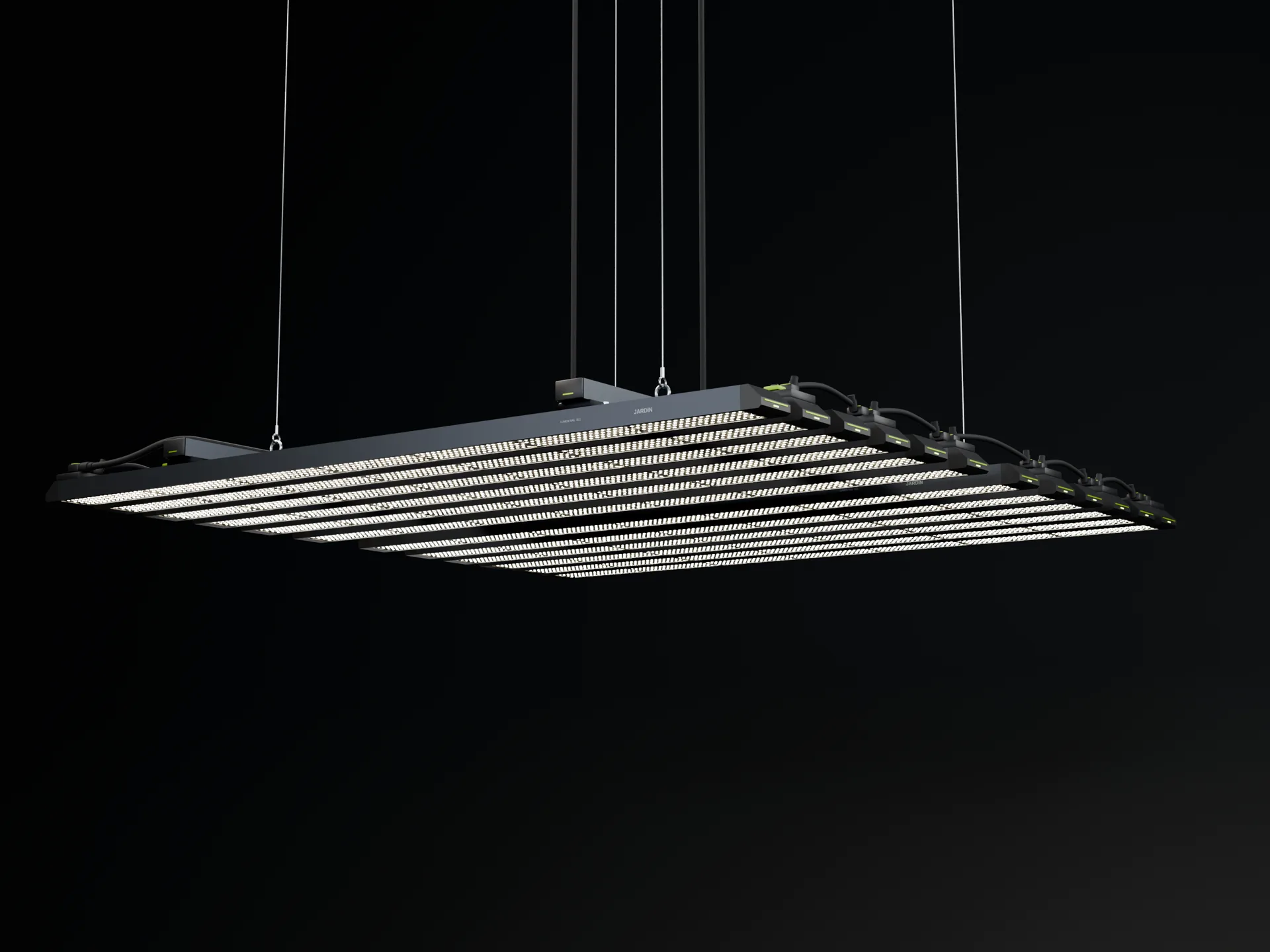
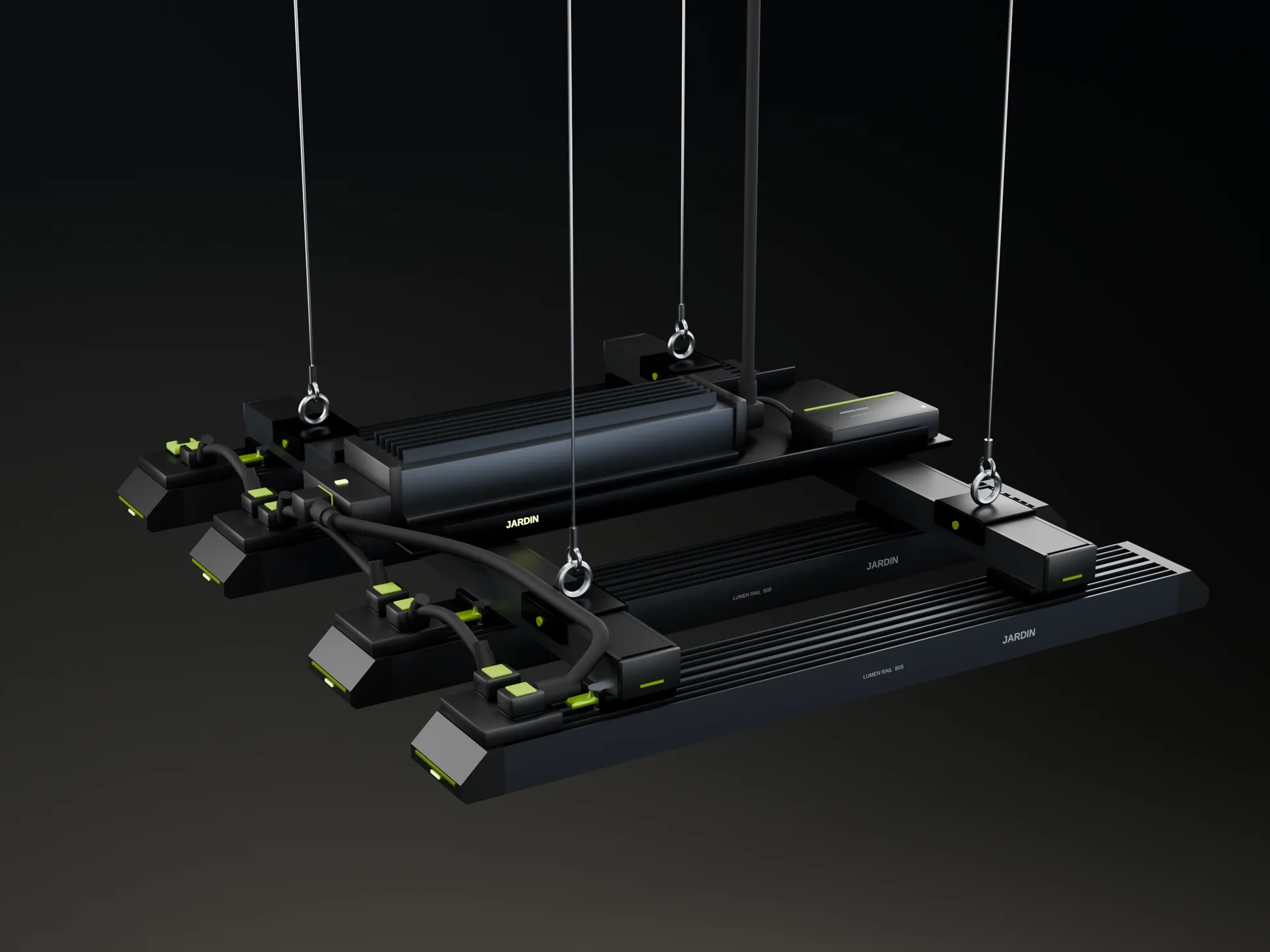
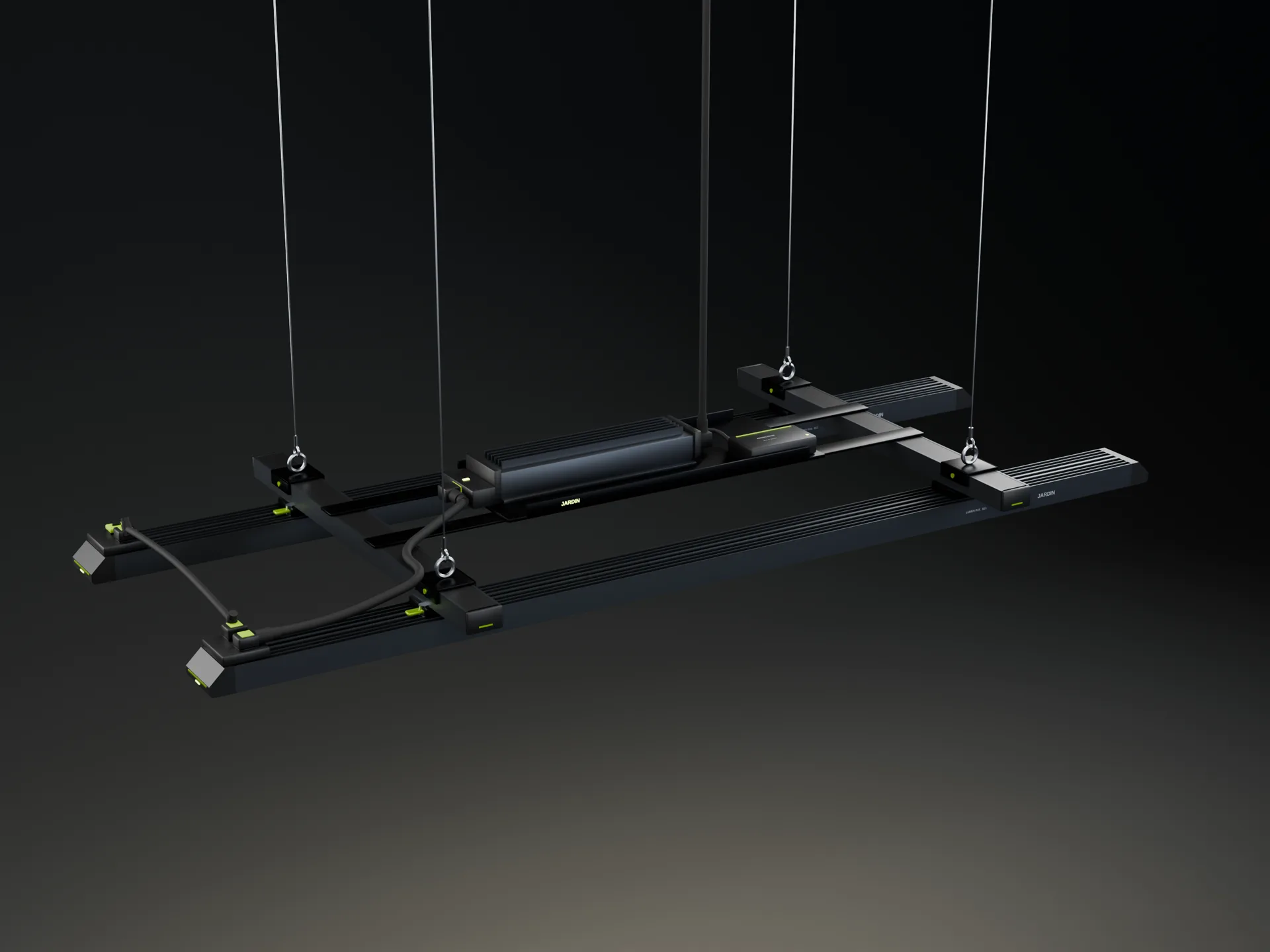
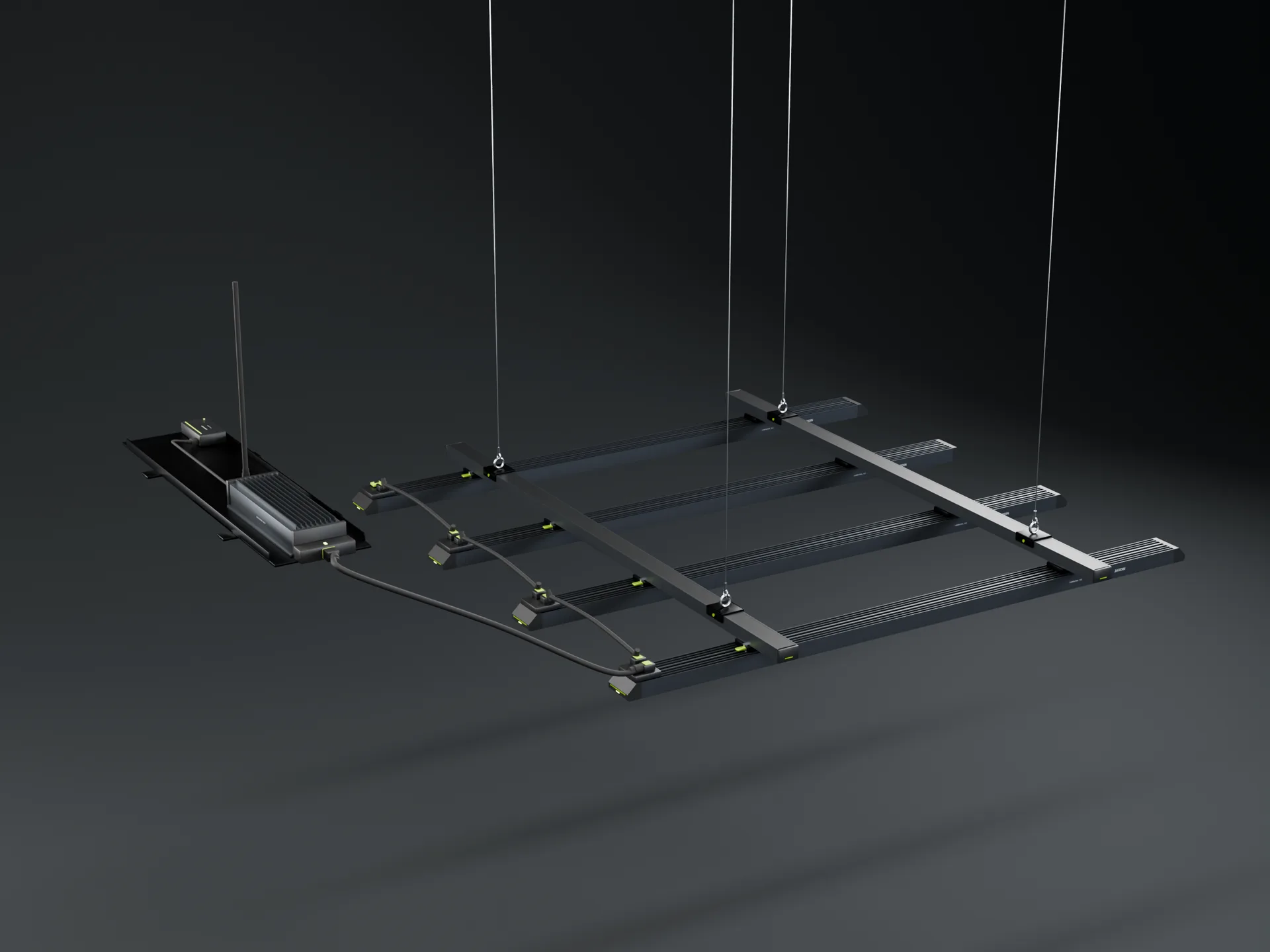
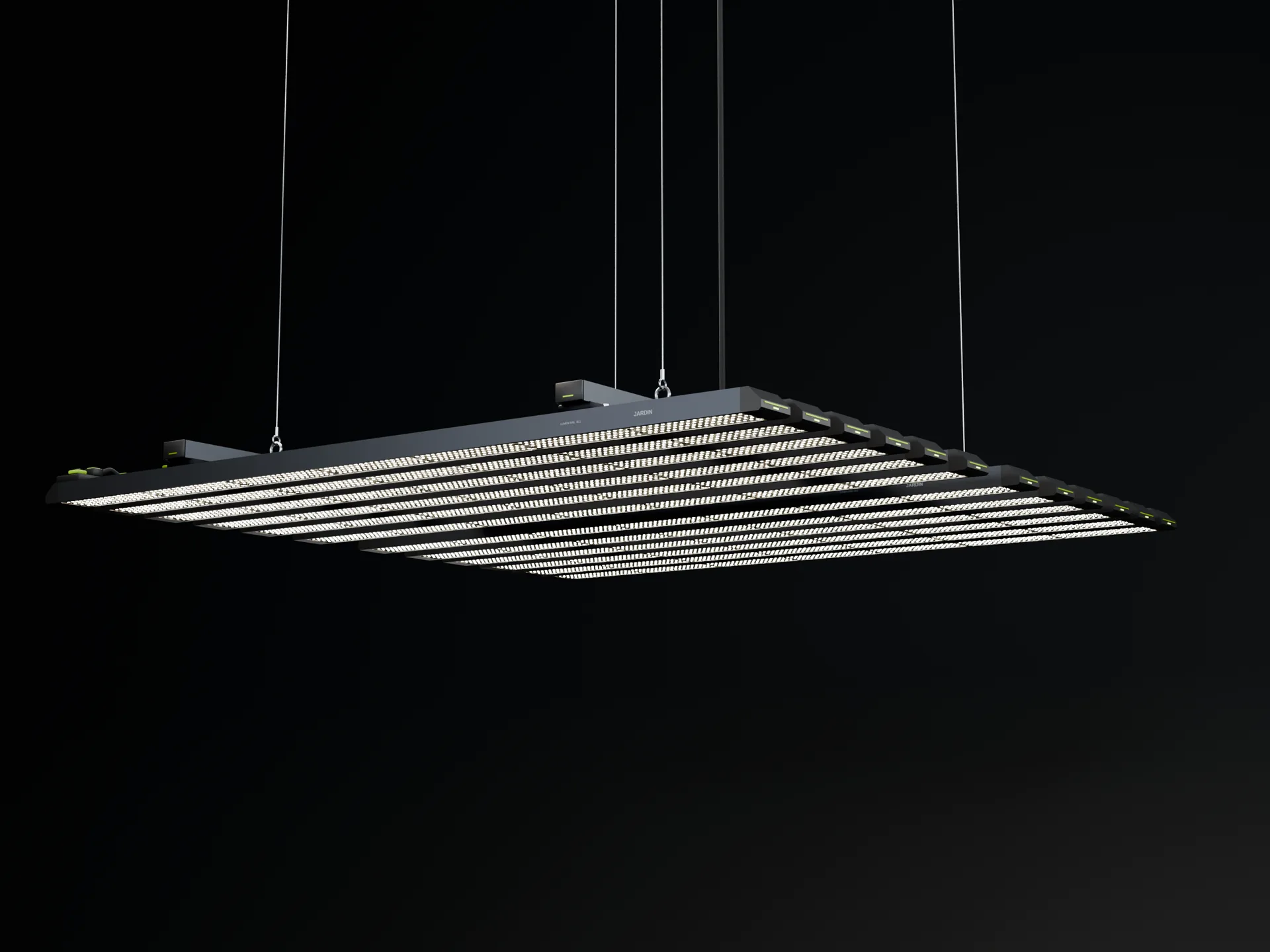
Lumen Rail is one LED bar, cut to four lengths, on two rails with a quarter-turn saddle. Add a bar, move a bar, swap a board or change the spectrum without buying a new light. One right-sized listed driver powers the whole light, and a small wireless Light Node dims it from the Jardin app.
1 barone extrusion, four lengths: 2, 3, 4 and 5 ft Designed
2.7µmol/J for the 44-1200 at the wall, first-pass Modelled
1,917µmol/m²/s average over a 4x4 from 1,203 W Modelled
0 toolsto add, move or swap a bar Designed
1 driversized for the whole light, not a stack of small ones Designed
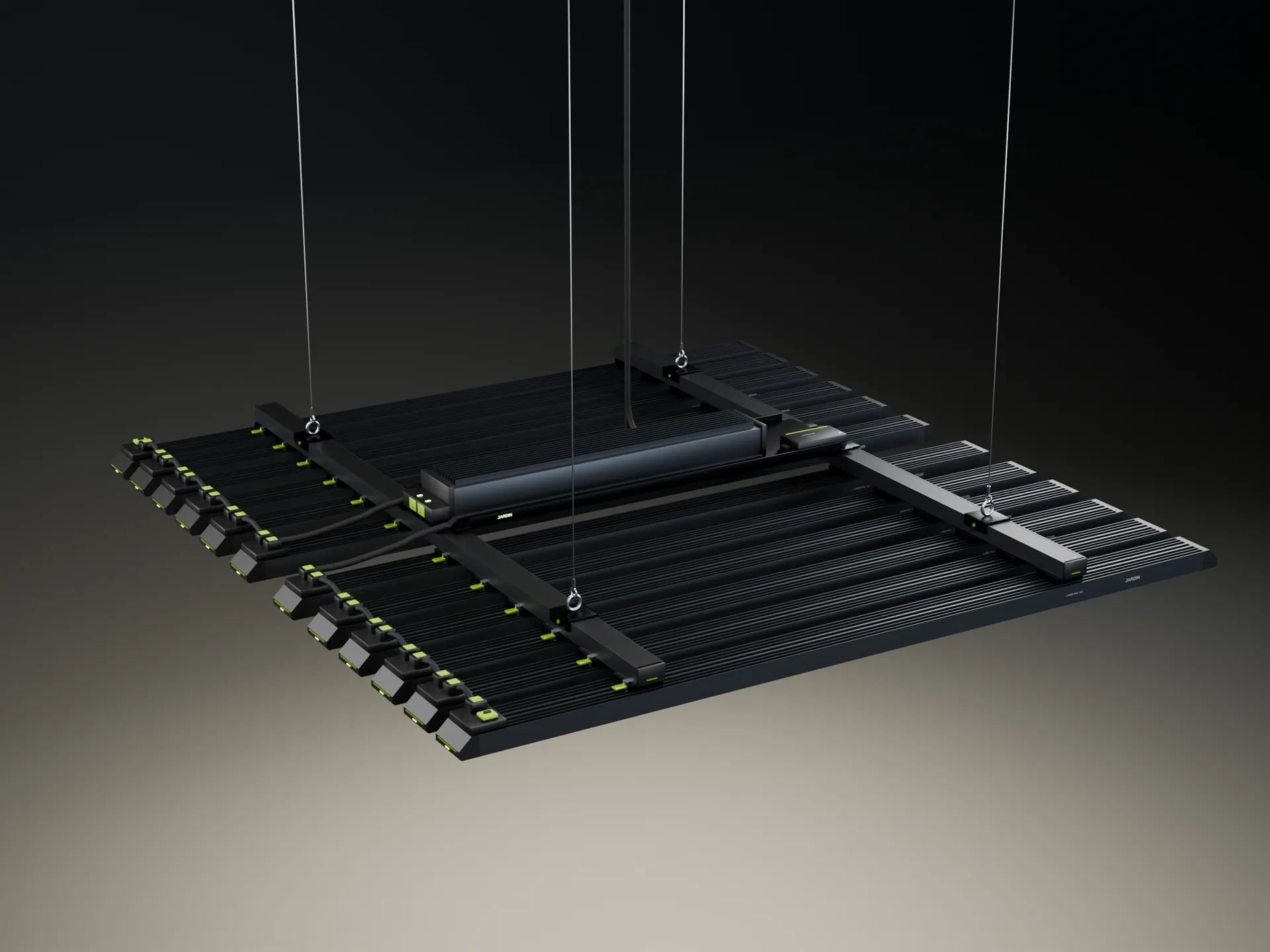 3D render · Lumen Rail 44-1200
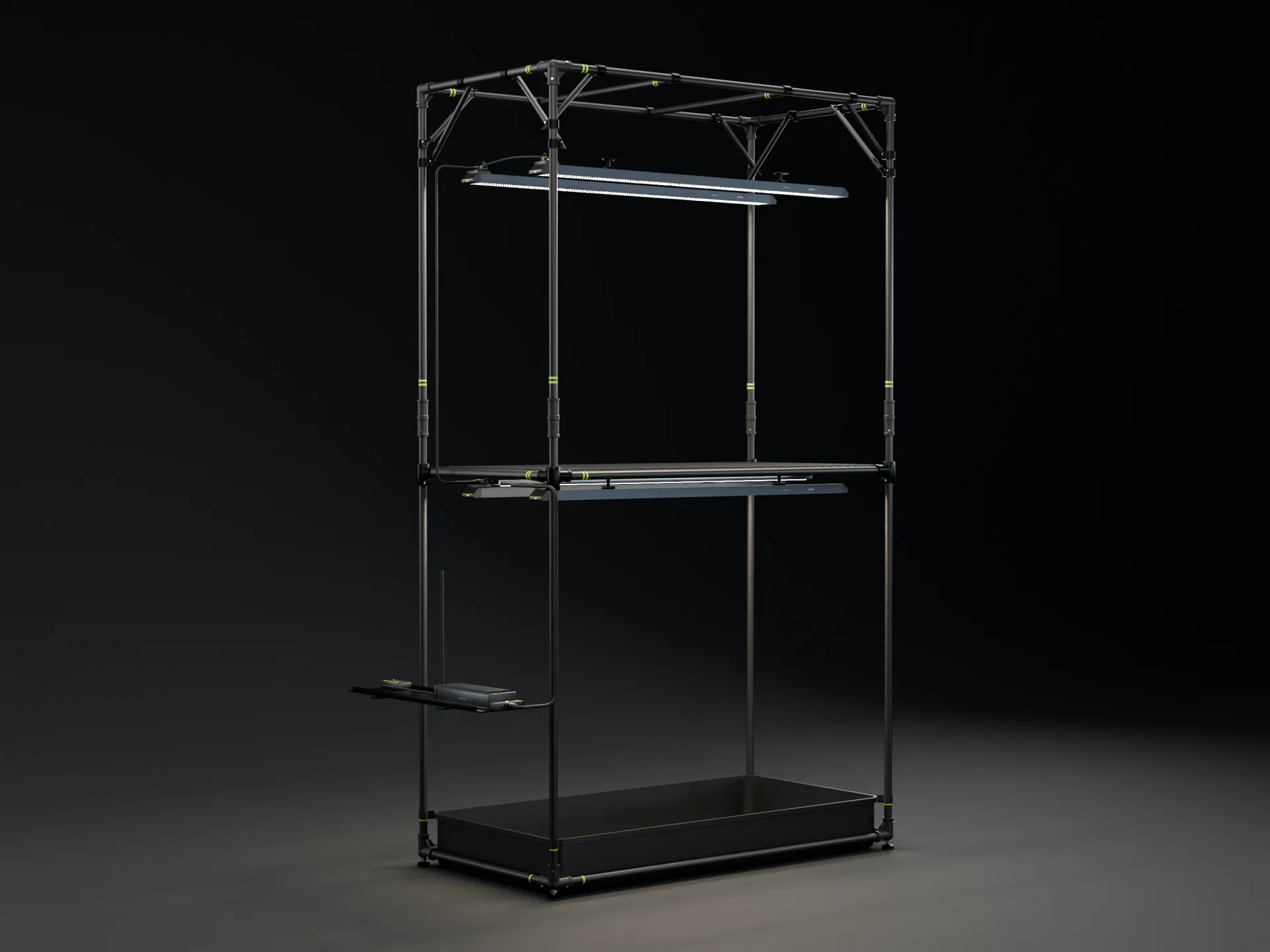
Concept renders made from the design files, not product photos. Every number on this page is a design target Designed or worked from one Modelled; no LED, driver or board has been sampled or measured.
Watch · concept renders, narrated
See it work.
Short films made from the design files. Nothing here is a product photo; the hardware is in development after years of prototypes.
360° · every side
Turn it round.
Drag a picture to turn it, or press Spin. Each one is 24 views of the same design that is behind every other picture on this page: concept renders, not product photos.
Build a light · we pick it, you tune it Modelled
Tell us your tent. We'll pick the light.
Pick your tent, what you're growing and how hard you push. We pick the light for it, set the dimmer, the height and the hours, and show you why. Then change anything: drag the bars, add one, slot in a far-red bar, raise the light and watch the photons in 3D.
Growing
You are
Spectrum
–land straight on the canopy
–land after a wall bounce
–lost to the walls
0110220330450 W/m²
Heat view: light absorbed at the canopy, in watts per square metre (PPFD × about 0.22 J per µmol). Every one of those watts warms the leaves and the air above them.
PPFD at the canopy, µmol/m²/s · the same colours as the tent renders below
–µmol/m²/s average at the canopy
–evenness, lowest ÷ average
–lowest spot
–brightest spot
–mol/m²/day
–watts at the wall
–µmol/s from the light
–µmol/J
–driver
–µmol/s far red, not in PPFD
–edge ÷ average
–of the canopy within ±10 % of the average
Driver
Walls
Spectrum · photon shape, illustrative
Tap a bar to select it, then drag it along the rails, or use the arrow keys. Bars keep 65 mm apart, and a far-red bar needs a little room beside a white one.
Modelled: each bar is a row of light points facing down, the tent walls scatter light back in every direction at the reflectance you pick: 75 % for a typical tent interior with its zippers, ports and creases, 90 % for a clean, flat lining (the 3D view draws a sample of photons bouncing). Heat: every watt at the wall ends up as heat. The driver loses about 6 %, inside the tent or outside it; of what reaches the boards, the part that leaves as light is the photon flux times about 0.22 J per µmol for white (0.18 for 660 nm, 0.16 for 730 nm), and the rest heats the fins; the light becomes heat where it lands, on the canopy or the walls, and the level comes from the Jardin simulation engine, which traces the light from the kit's bars through the tent and counts where every photon ends (it replaces our 0.85 planning rule from the knowledge base: the engine now computes the capture, and the share it finds changes with hang height and walls). The page's own map gives the picture of the spread, and bars you move are anchored to the engine's average for the nearest standard layout. The model ranks layouts against each other; it is not a meter reading. Watts and photons per bar are the kits' first-pass calculations; dimming is shown as straight-line, and real drivers and diodes do a little better turned down. Far red (700–750 nm) is counted separately because PPFD stops at 700 nm.
Up close · one cell of one board
Turn it on. Look closer.
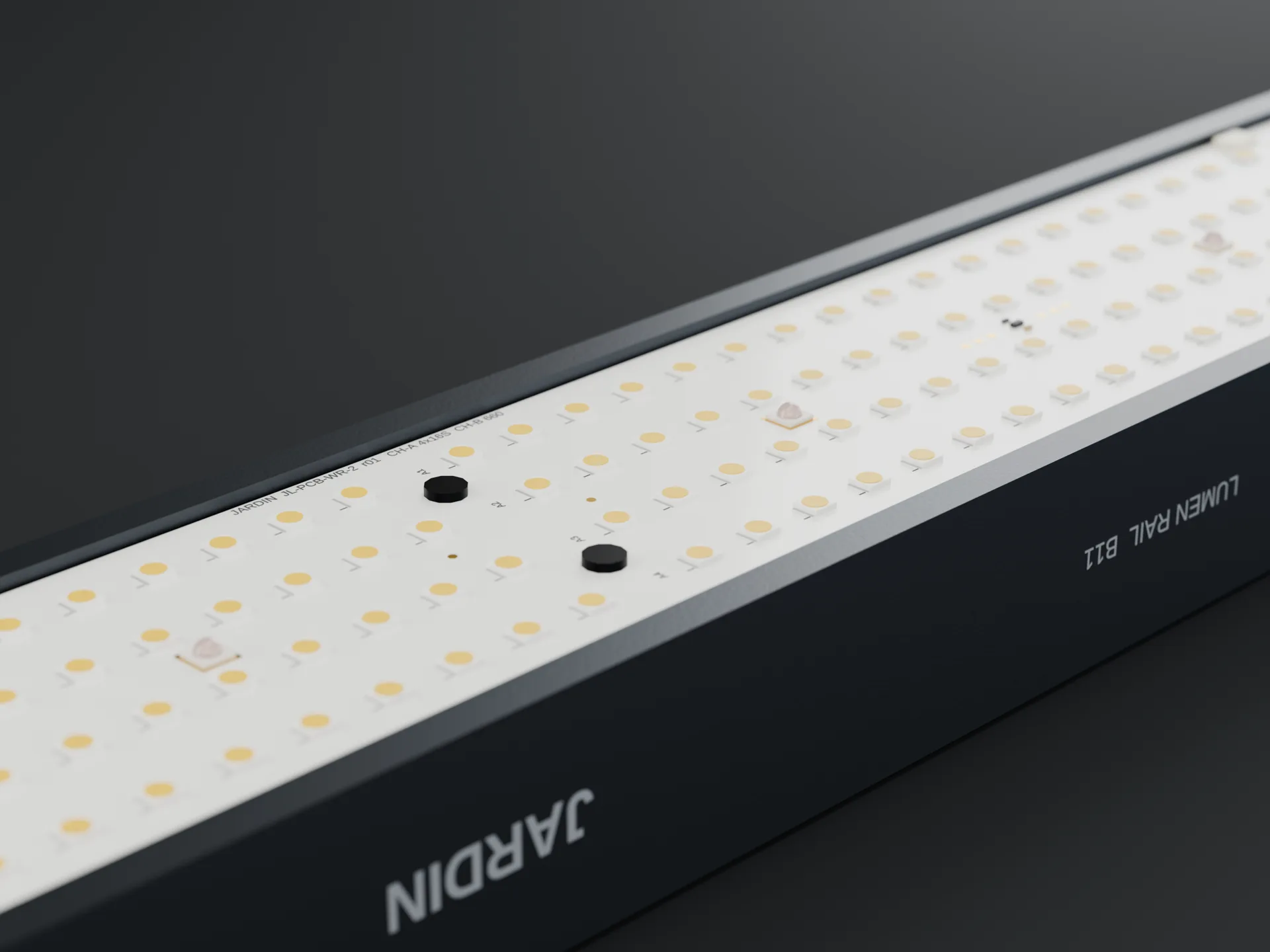
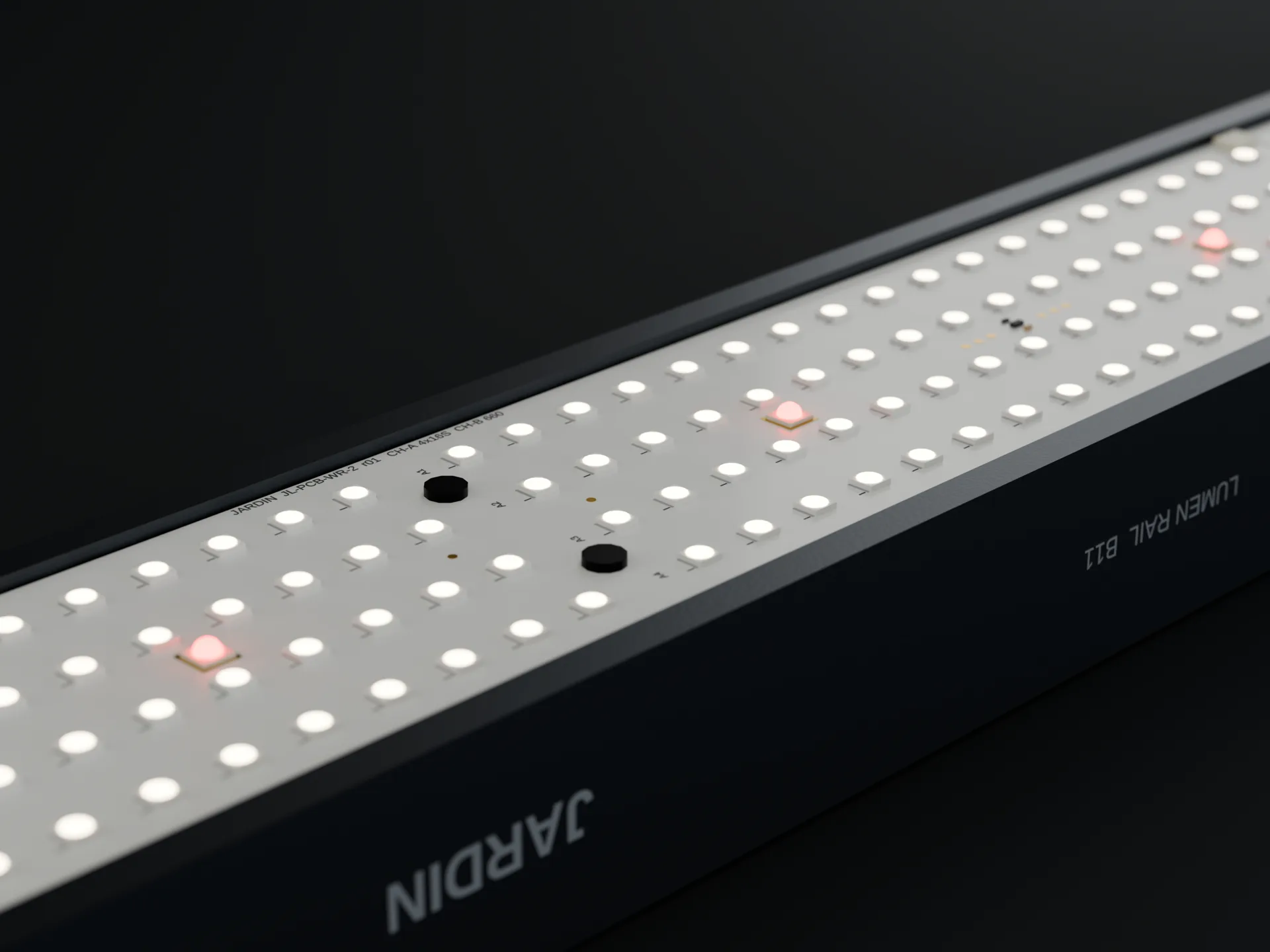
Slide the power up to light one cell of a Spectrum X board: 3030 white diodes in rows, with a 660 nm red emitter on its own channel. The boards below light with it; move over them to look through the loupe.
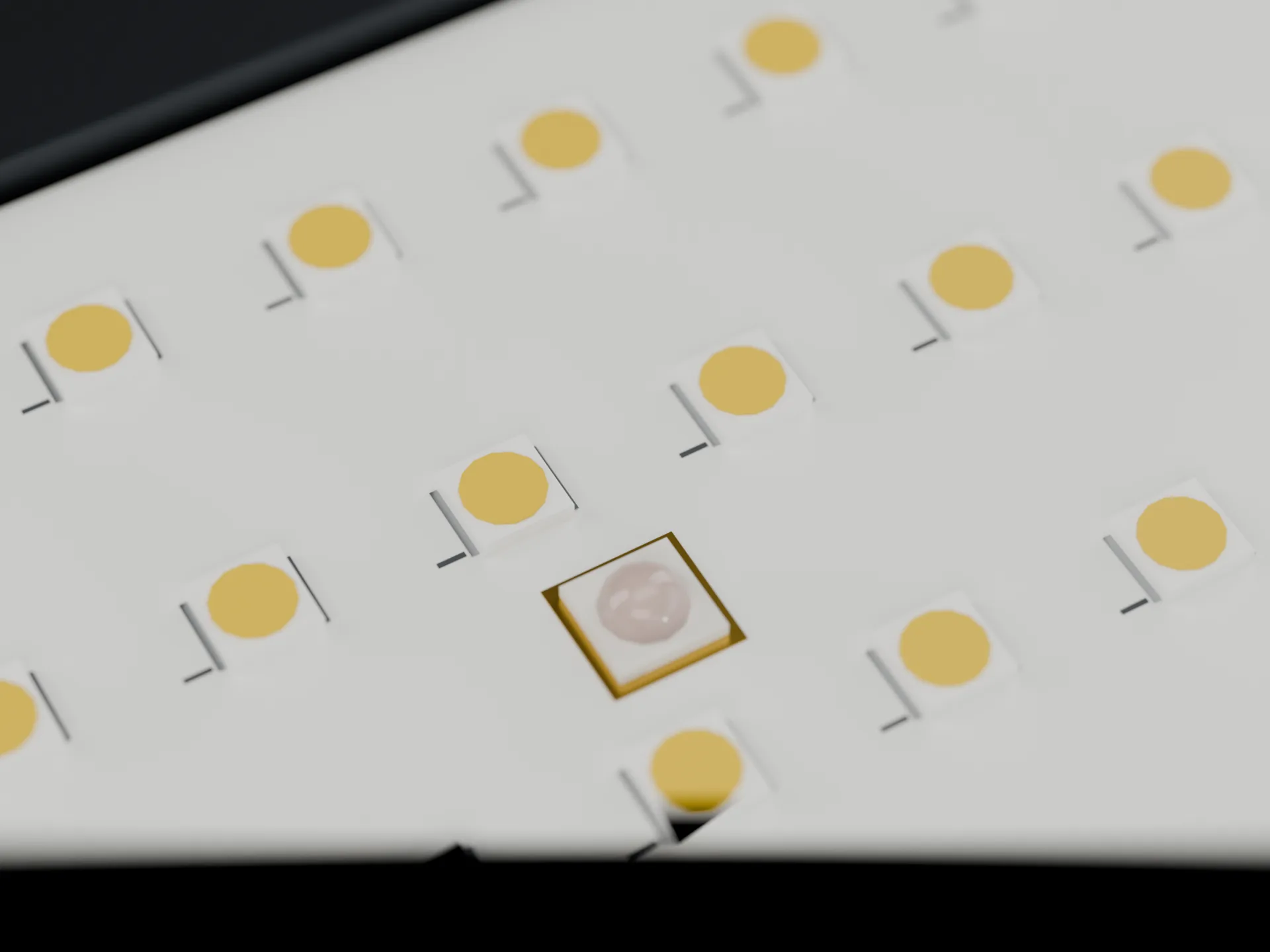
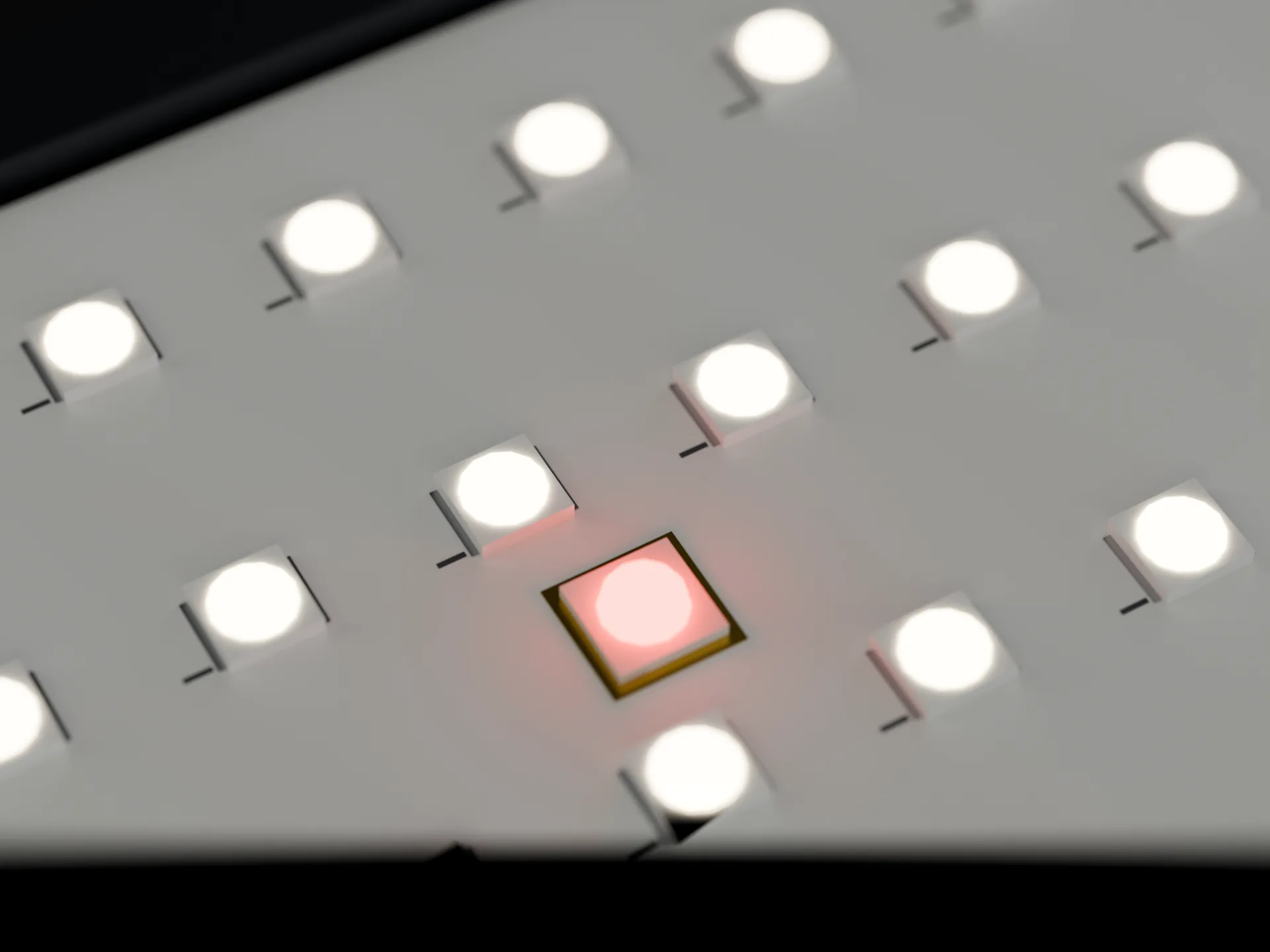
Each 150 mm cell carries 72 white diodes as four strings of 18, about 50 V at full power, inside the driver's window. The boards come in 2-cell and 3-cell pieces and are replaceable on their own.
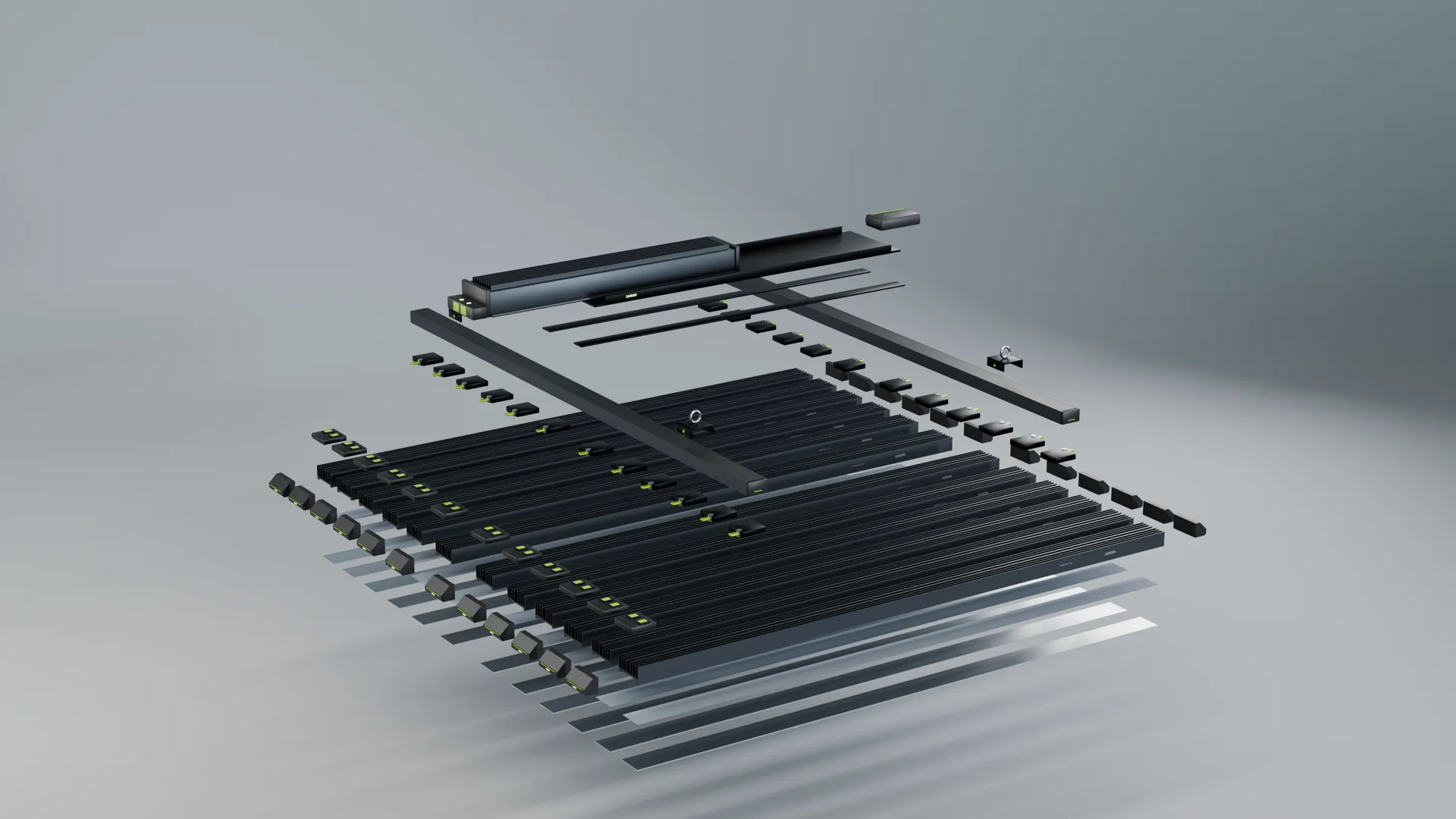
Every part, named · with its part number
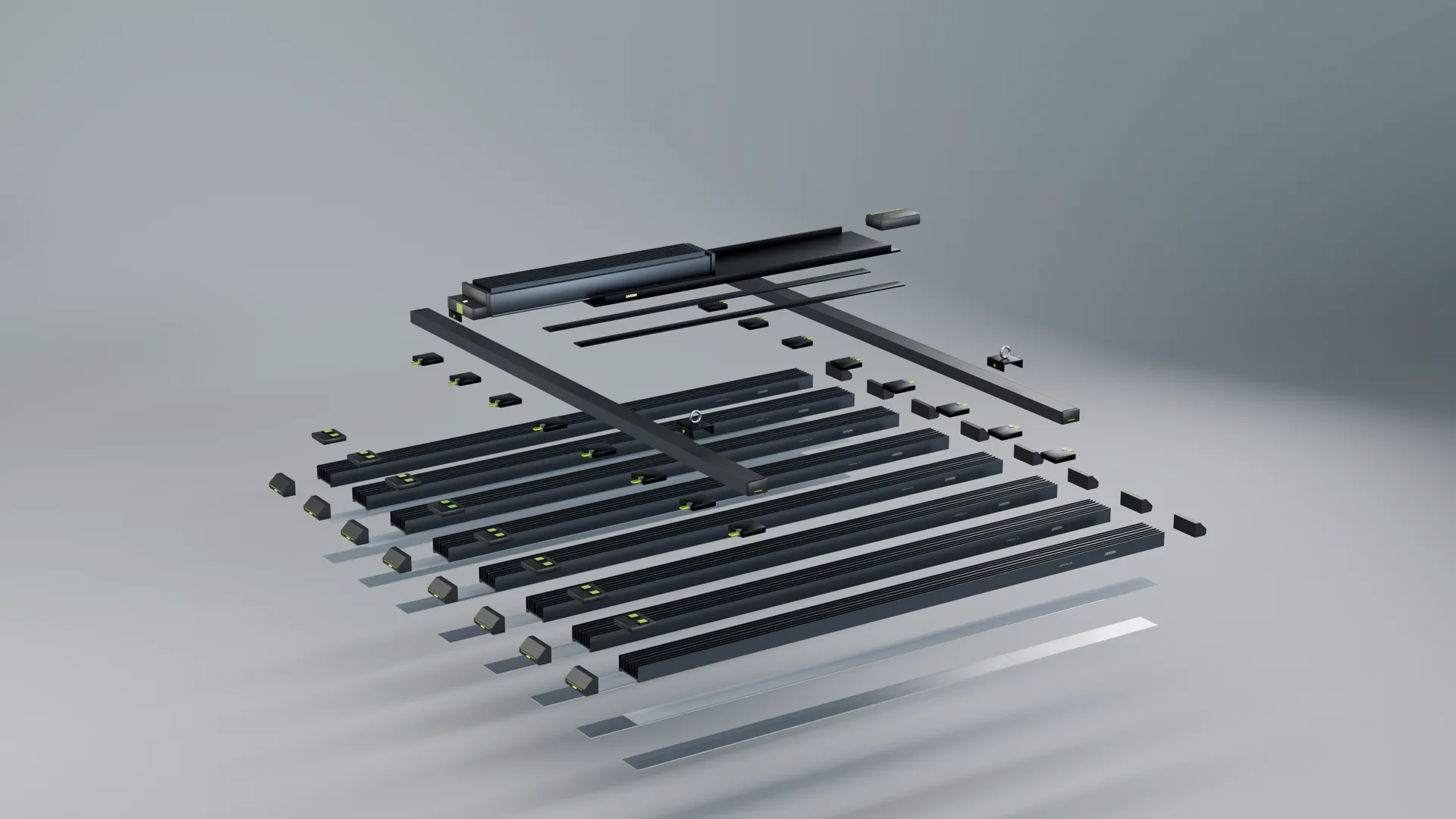
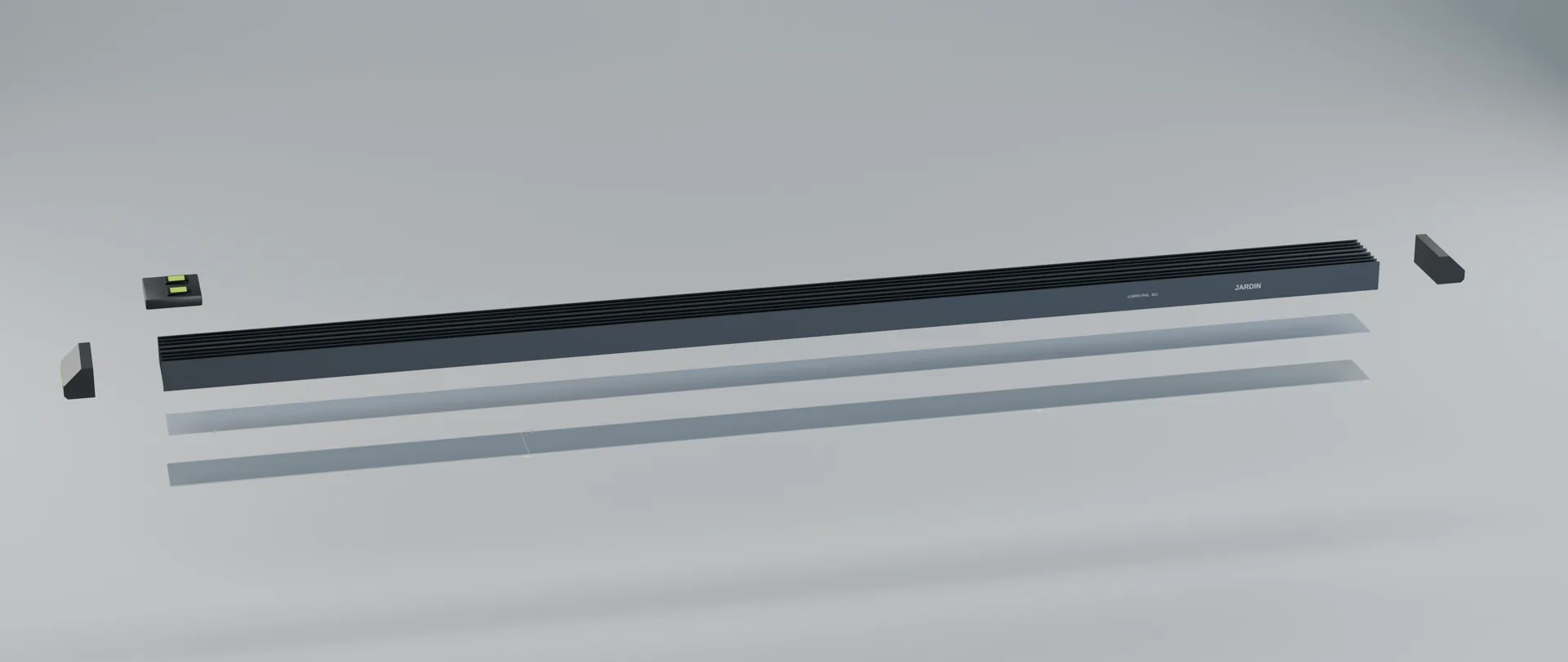
Taken apart. Every piece labelled.
The labels come out of the 3D model itself and carry the part numbers the render was built from. Hover or tap a part, or take the tour.
Far red · a slim bar that goes anywhere
A 20 mm bar between the whites.
The far-red bar is 20 mm wide with the same saddle, slot and chain ports as a white bar. It locks at any 5 mm station on the rails, so it slots between white bars instead of taking a white bar's place. Backers who reserve a Lumen pick their free drop: a far-red bar, a spare white bar, or a spare board set.
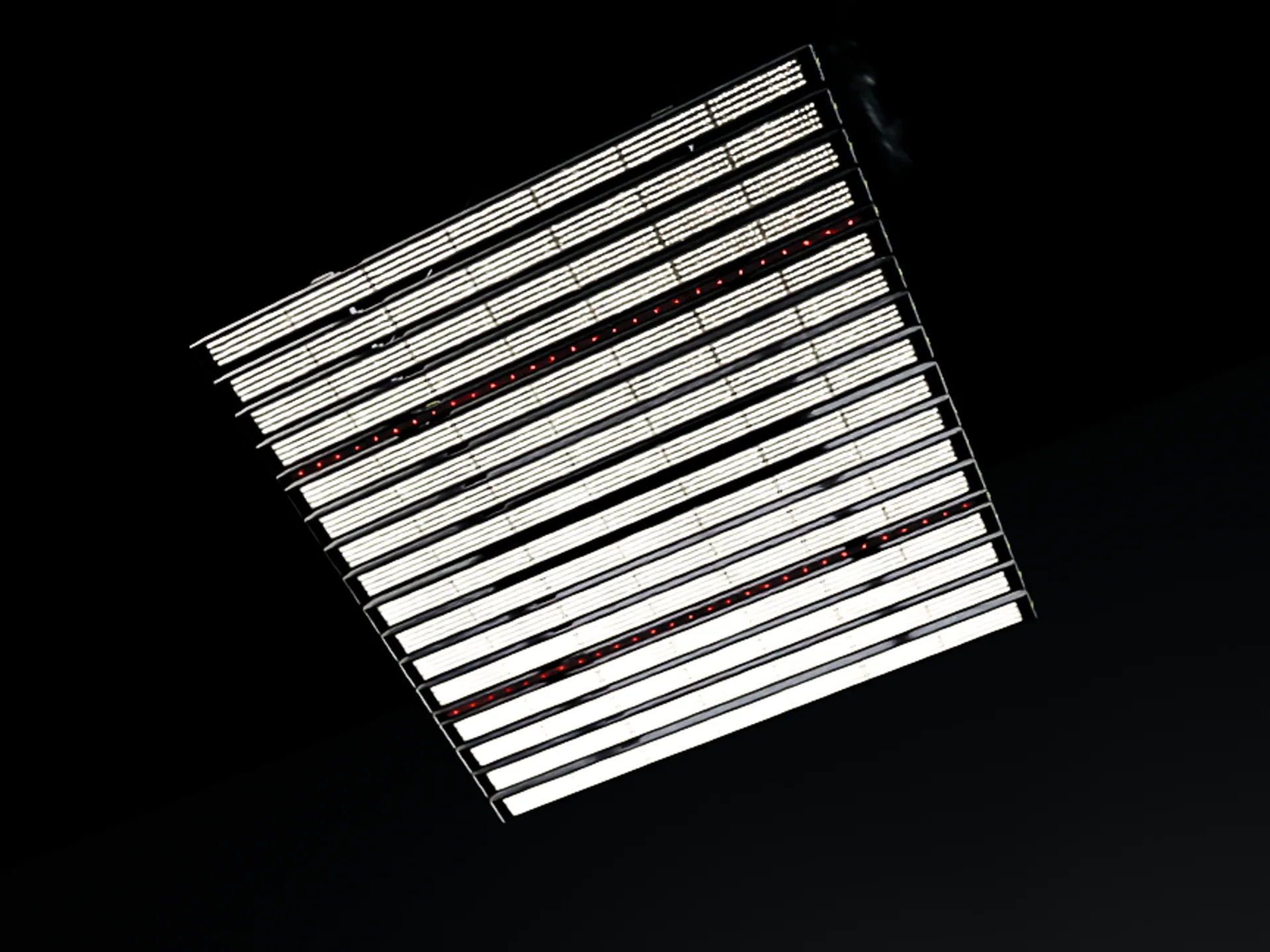
H02 · far-red bar
Two of them fit a 16-bar light
On the 16-bar kits the white bars re-space themselves, never closer than 65 mm, to make room for two far-red bars. On every other kit they drop into the gaps. Try it in the builder above: add a far-red bar and drag it where you want it.
About 20 W and 44 µmol/s of 730 nm each, first-pass Modelled.
Arrangements · the same parts, rebuilt
Same bars. Different lights.
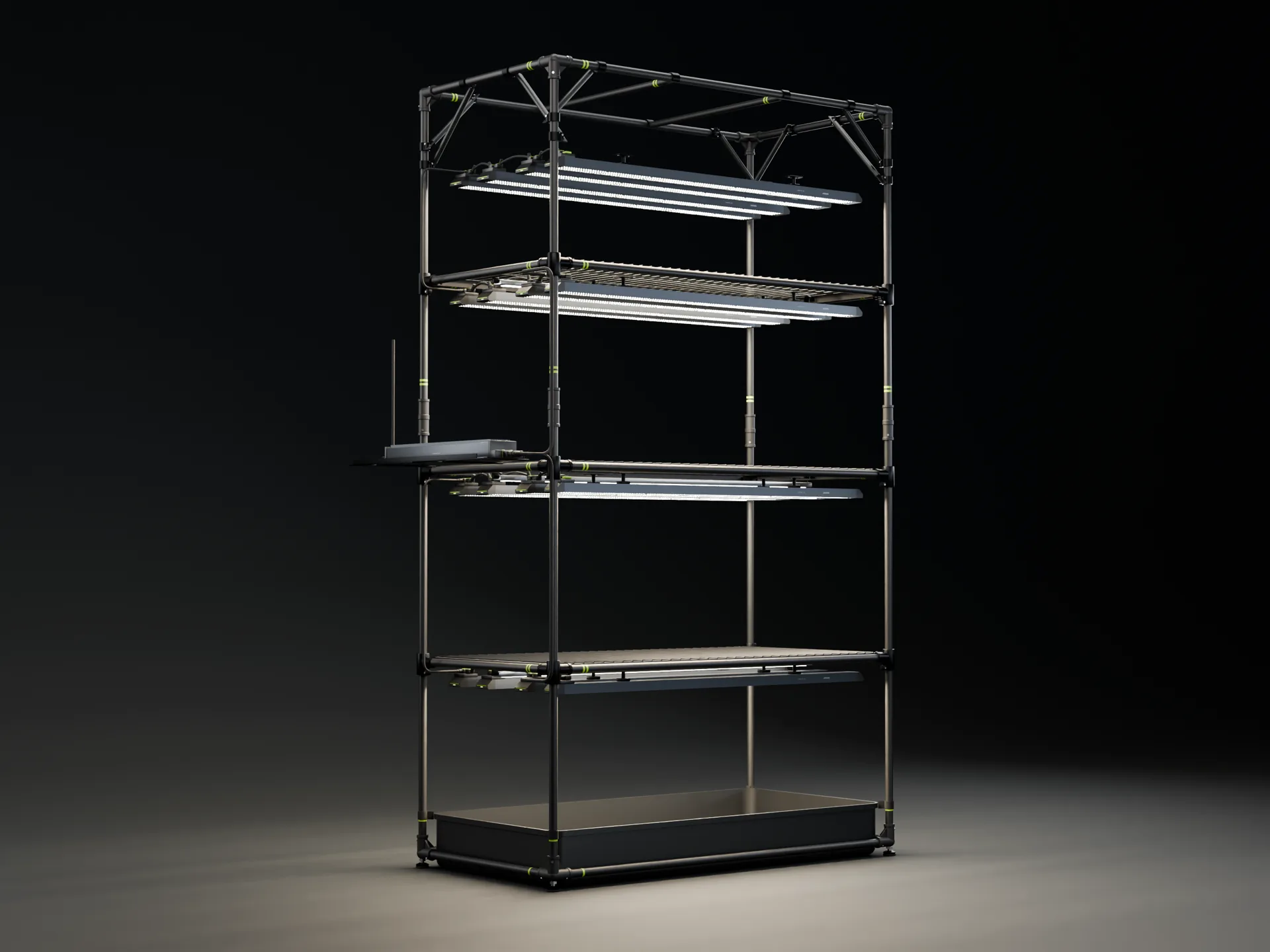
Because every bar, rail and saddle is the same, one set of parts becomes a different light when your grow changes: a flowering 4x4, a veg rack, a nursery on two tiers.
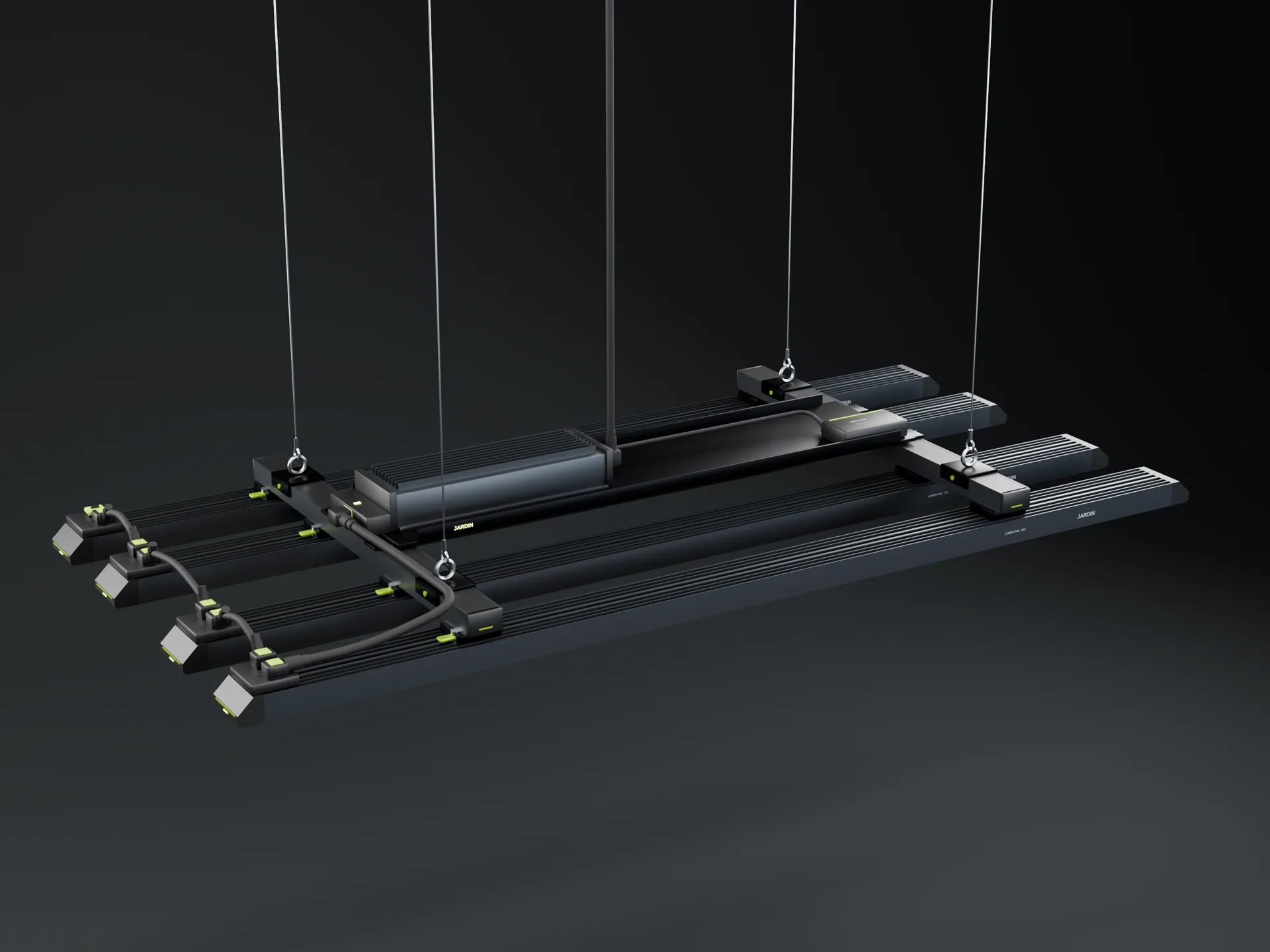
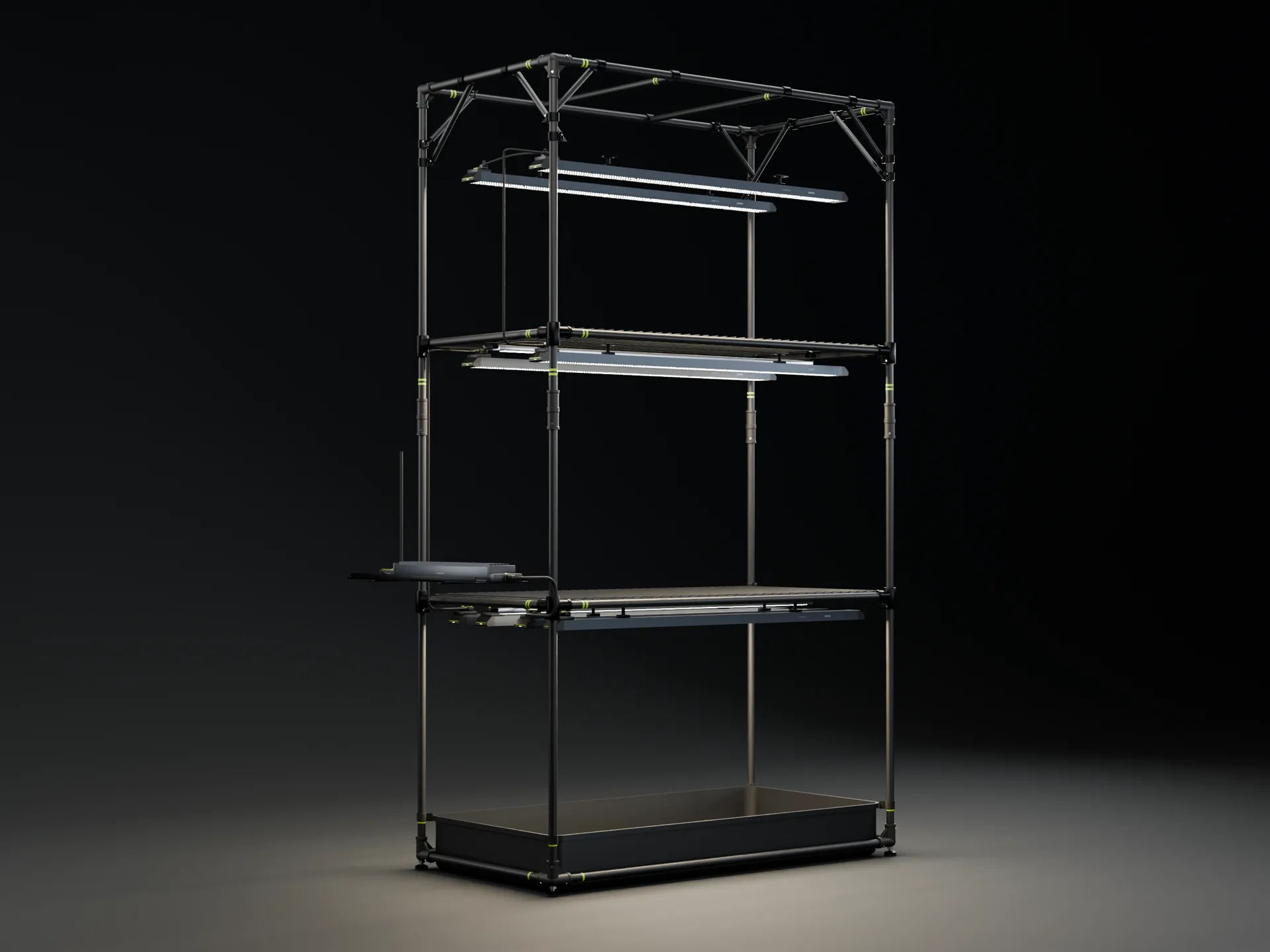
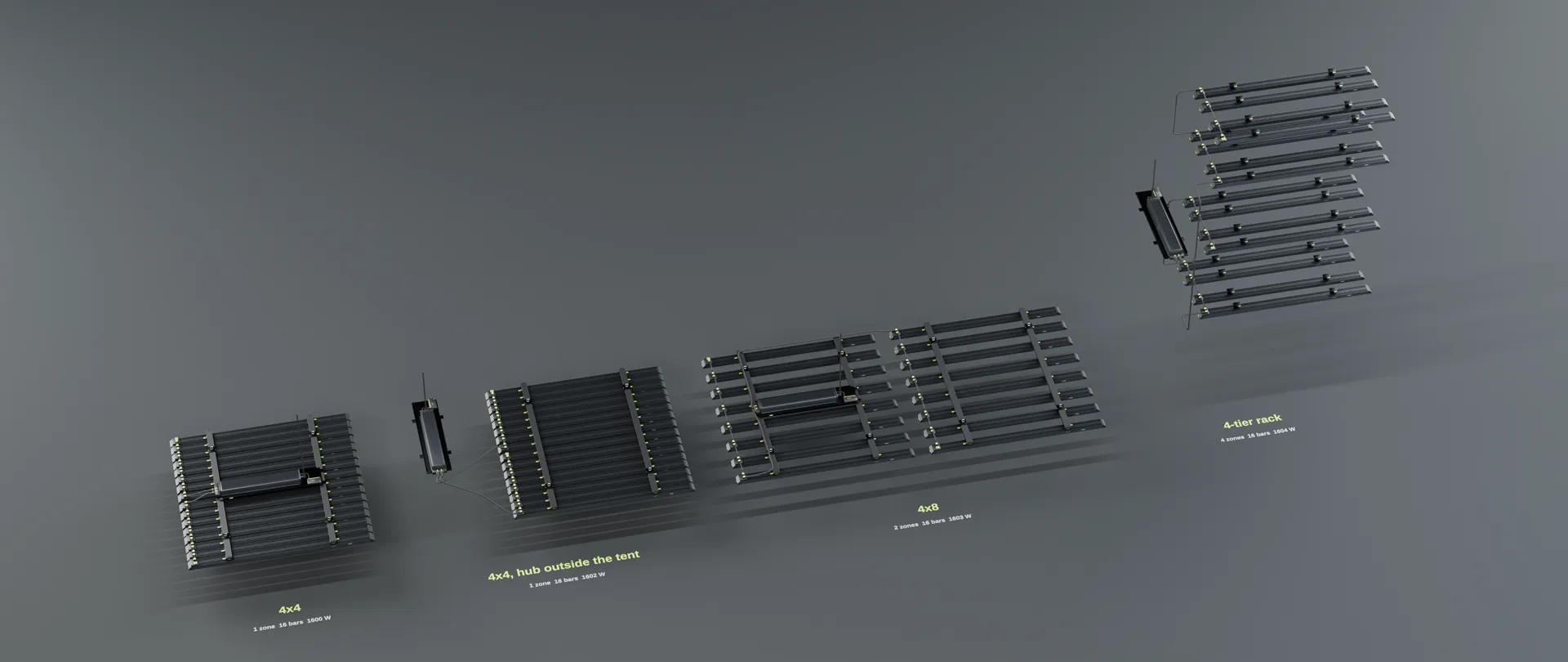 3D render · one kit, every arrangement
In a tent · every light, every layout, mapped Modelled
Hung in a Jardin tent, mapped.
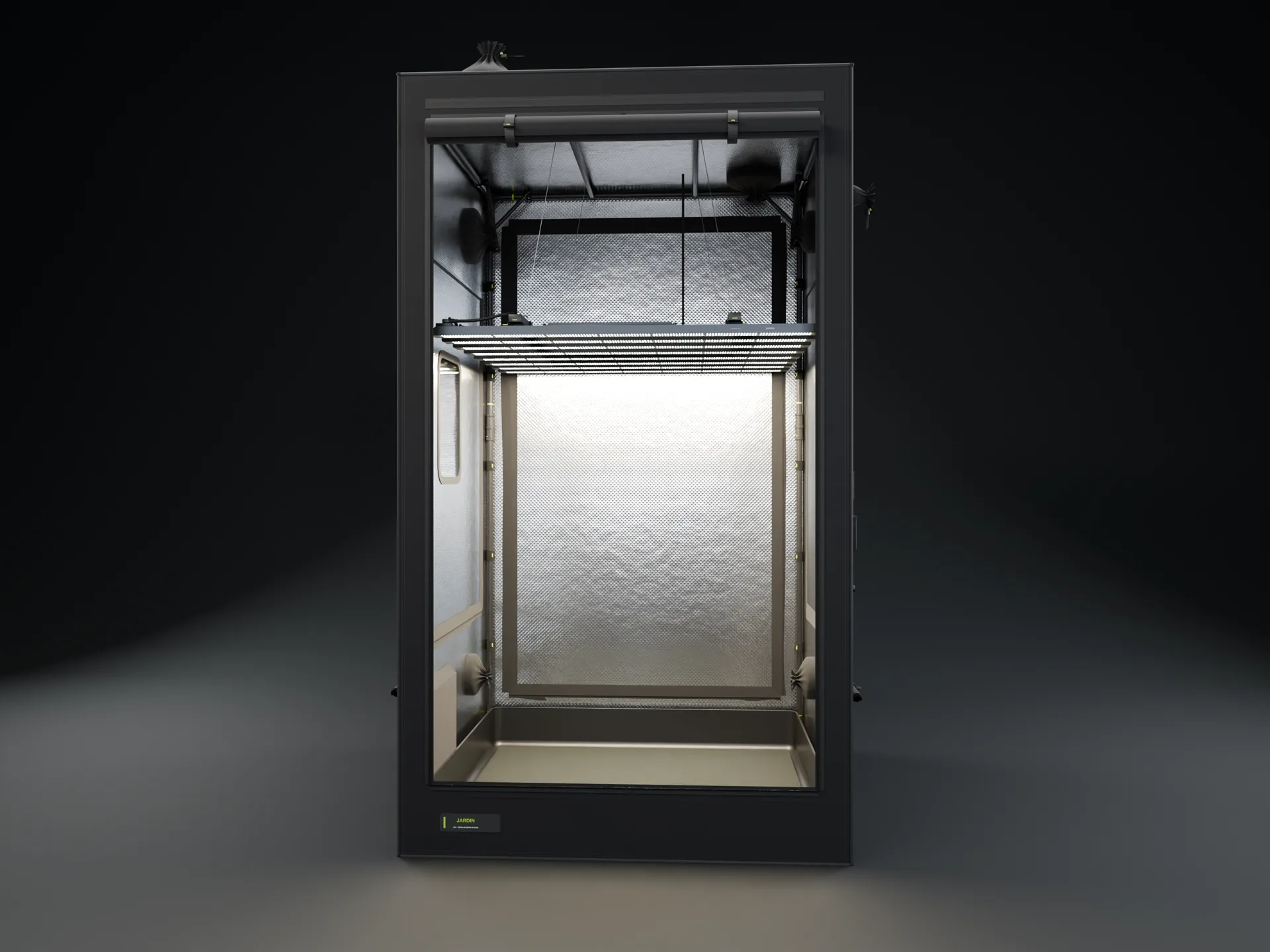
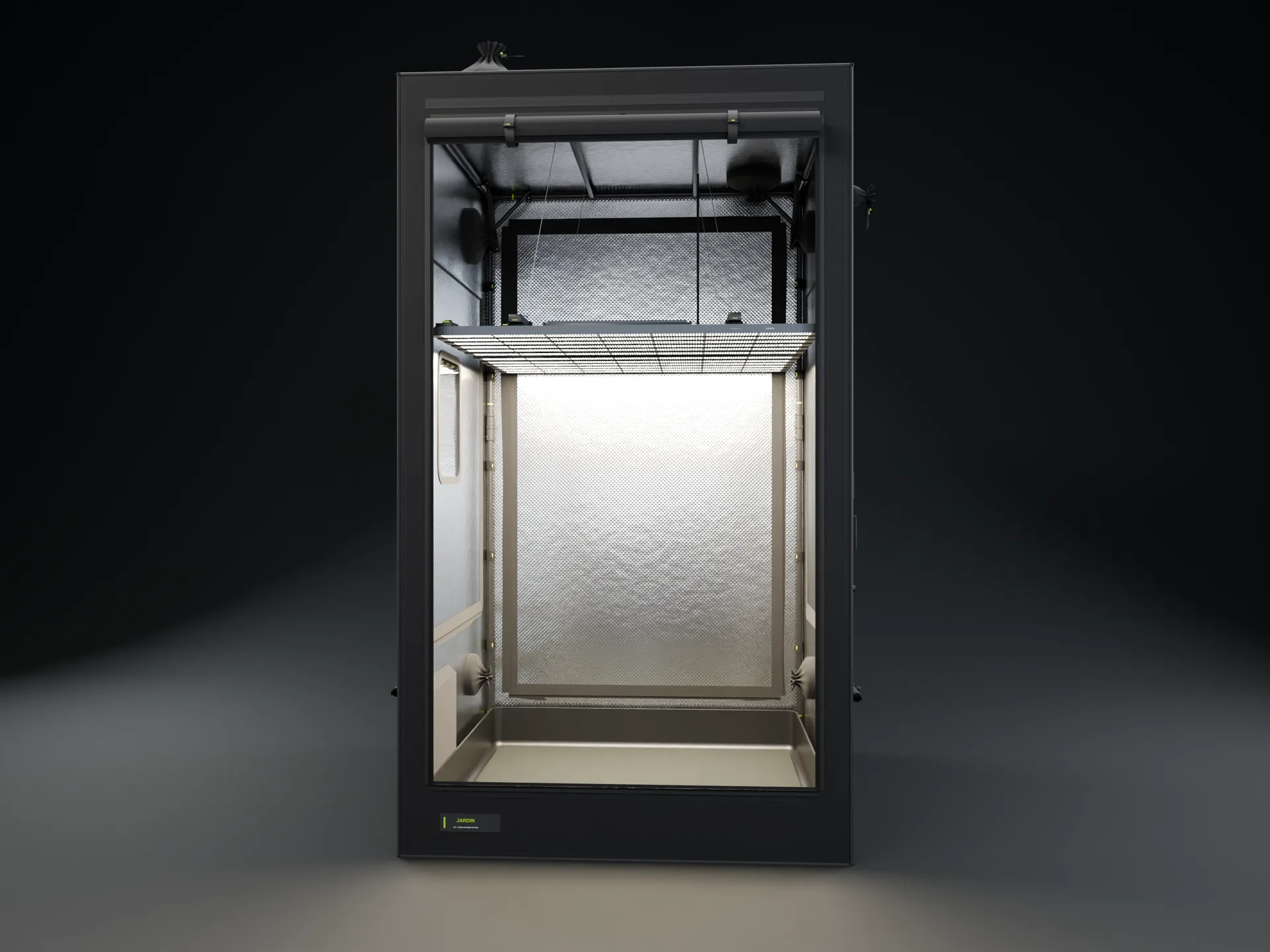
The Lumen Rail 44-1200 in a J44, set up for flower. Then pick any 4x4 light and any way of hanging its bars: one tent, two tents from one light, two tiers, a four-tier nursery or a 2x4. The map shows what reaches the canopy, against the 1,500 to 1,800 µmol/m²/s band we aim a 4x4 at in flower, run flat out.
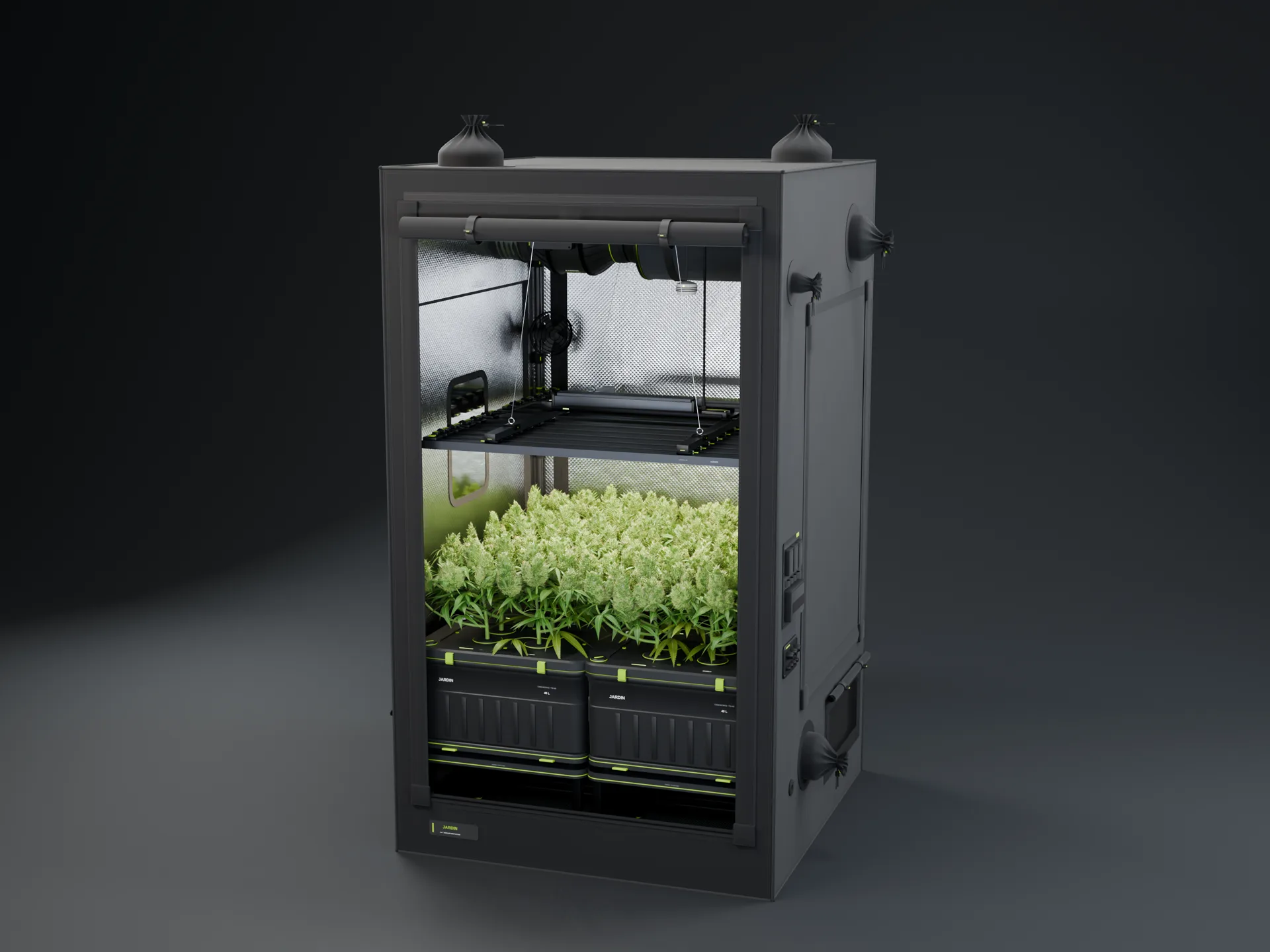 Lumen Rail 44-1200 in a J44, in flower
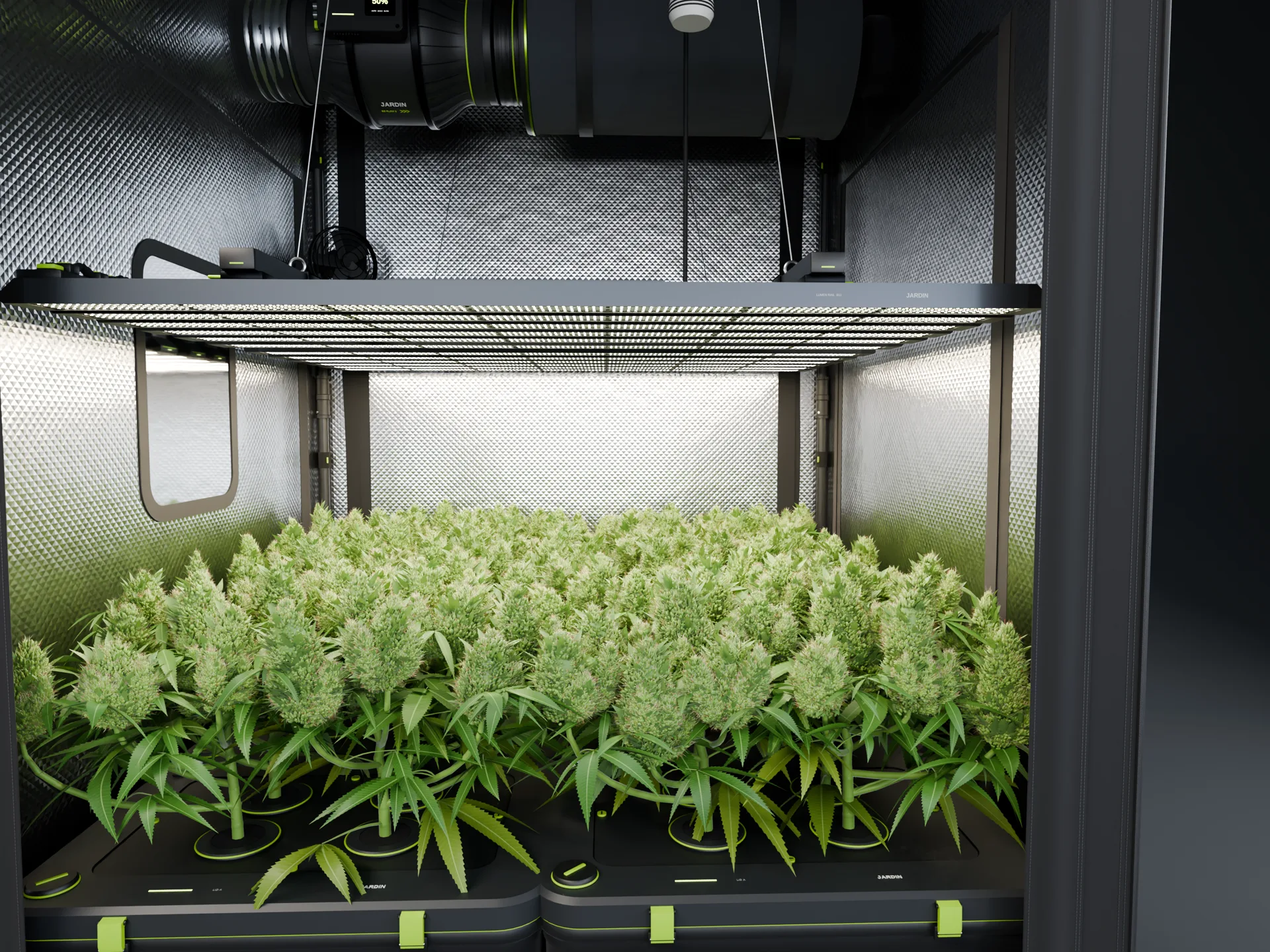 Under the light, doors open
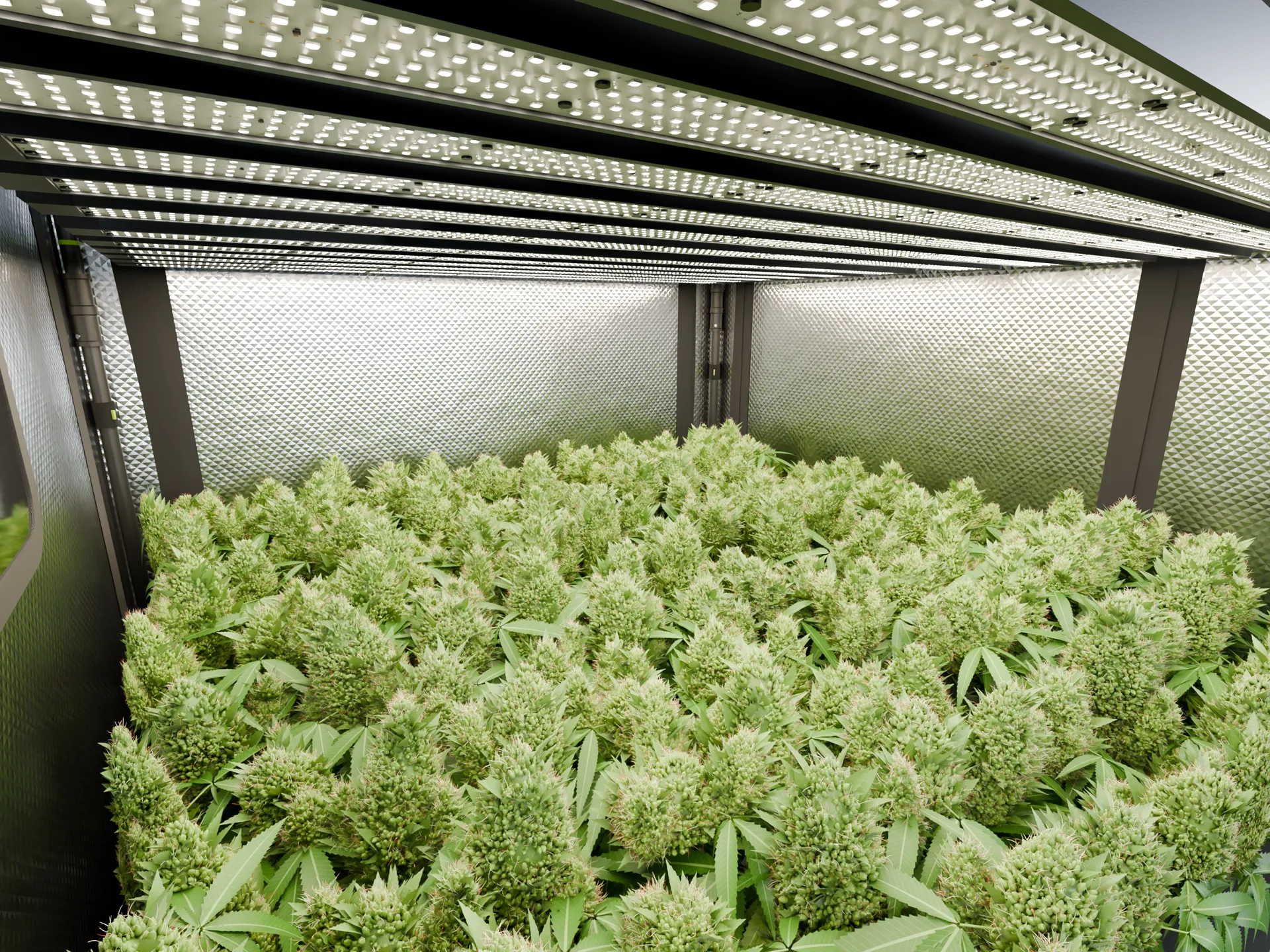 At the canopy, under the bars
Light · Lumen Rail 44-1200, full power
Hung as
PPFD at the canopy, µmol/m²/s. The outlined band is 1,500 to 1,800 µmol/m²/s, where a 4x4 in flower belongs, light run flat out; more is room to push for a record run. On the map, the dashed line rounds every square at or above 1,500 µmol/m²/s. The triangles mark the lowest spot, the average and the brightest spot of the first canopy.
Calculated, not lab tested. Every figure here comes from the Lumen design model, the same one behind the kit specs: each bar is a row of light points facing down, the tent walls bounce light back at 85 % a bounce, the bars sit where the model finds the canopy evenest on the rails, and the average is set so 85 % of the light's photons land on the canopy. Light 300 mm above the canopy, full power, 100 mm squares. Daily light is the average PPFD times the hours the light is on. No LED, board or driver has been sampled or measured. Tents or tiers on one driver come on and go off together, through the light's listed smart plug; the built-in chip dims it.
The range · kits are just layouts
Seventeen kits, one bar.
Each kit is a number of bars on a pair of rails, sized for a Jardin tent. Every one of them is a starting point in the builder above.
| Kit | Tent | Footprint, mm | Bars | Watts at the wall | µmol/s | µmol/J |
|---|---|---|---|---|---|---|
| Lumen Rail 22-200 | J22 | 600 × 600 | 4 | 203 | 535 | 2.63 |
| Lumen Rail 24-200 | J42 | 1200 × 600 | 2 | 203 | 541 | 2.67 |
| Lumen Rail 24-400 | J42 | 1200 × 600 | 4 | 403 | 1,083 | 2.69 |
| Lumen Rail 33-600 | J33 | 900 × 900 | 8 | 603 | 1,619 | 2.69 |
| Lumen Rail 44-400 | J44 | 1200 × 1200 | 4 | 403 | 1,083 | 2.69 |
| Lumen Rail 44-600 | J44 | 1200 × 1200 | 6 | 603 | 1,624 | 2.69 |
| Lumen Rail 44-800 | J44 | 1200 × 1200 | 8 | 803 | 2,166 | 2.70 |
| Lumen Rail 44-800HD | J44 | 1200 × 1200 | 16 | 803 | 2,242 | 2.79 |
| Lumen Rail 44-1000 | J44 | 1200 × 1200 | 10 | 1,003 | 2,707 | 2.70 |
| Lumen Rail 44-1200 | J44 | 1200 × 1200 | 12 | 1,203 | 3,248 | 2.70 |
| Lumen Rail 44-1200HD | J44 | 1200 × 1200 | 16 | 1,203 | 3,306 | 2.75 |
| Lumen Rail 44-1500 | J44 | 1200 × 1200 | 12 | 1,503 | 3,976 | 2.65 |
| Lumen Rail 44-1600HD | J44 | 1200 × 1200 | 16 | 1,603 | 4,331 | 2.70 |
| Lumen Rail 44-1800 | J44 | 1200 × 1200 | 12 | 1,803 | 4,669 | 2.59 |
| Lumen Rail 55-1600 | J55 | 1500 × 1500 | 16 | 1,603 | 4,397 | 2.74 |
| Lumen Rail 48-1600 | J48 | 2400 × 1200 | 8 | 1,606 | 4,331 | 2.70 |
| Lumen Rail 88-3200 | J88 | 2400 × 2400 | 8 | 3,212 | 8,662 | 2.70 |
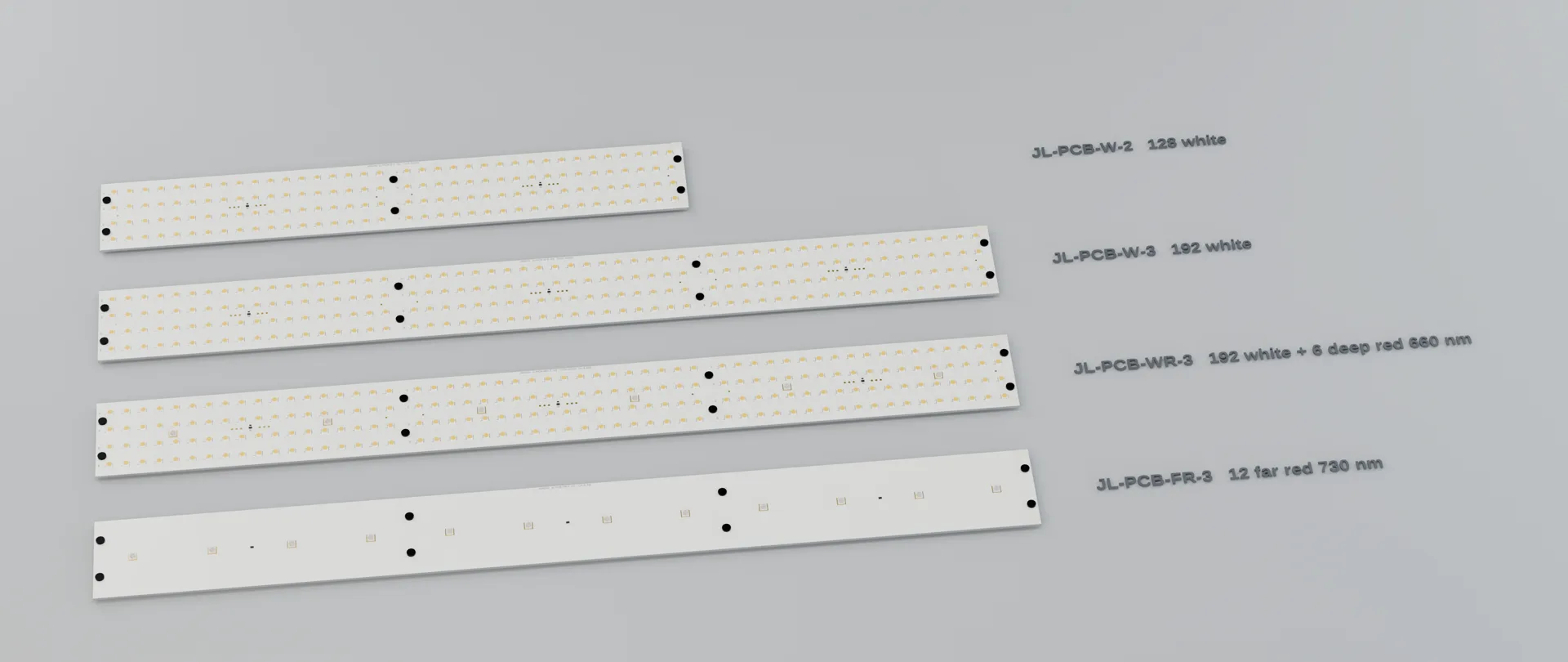 The boards
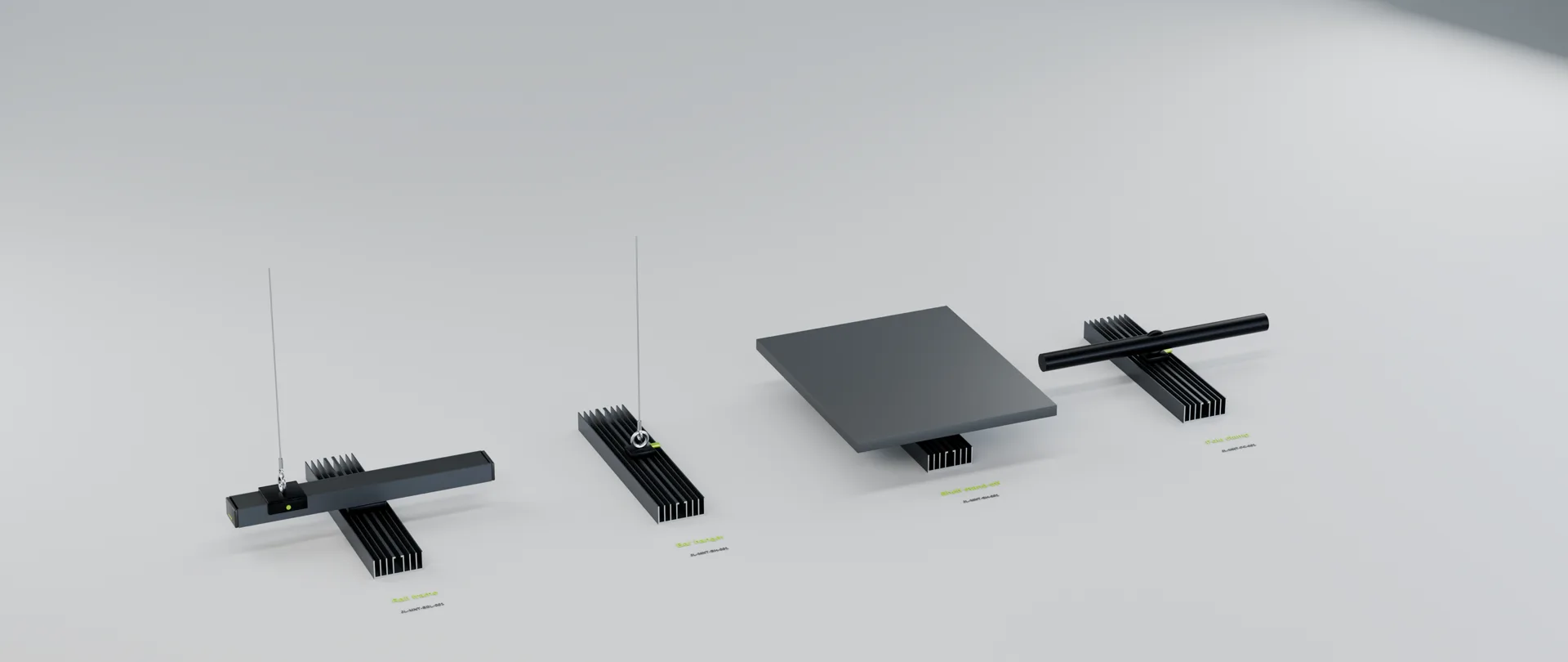 The mounts
Why it's built this way
Decisions you can see.
Six choices in the drawings, and the reason for each.
01
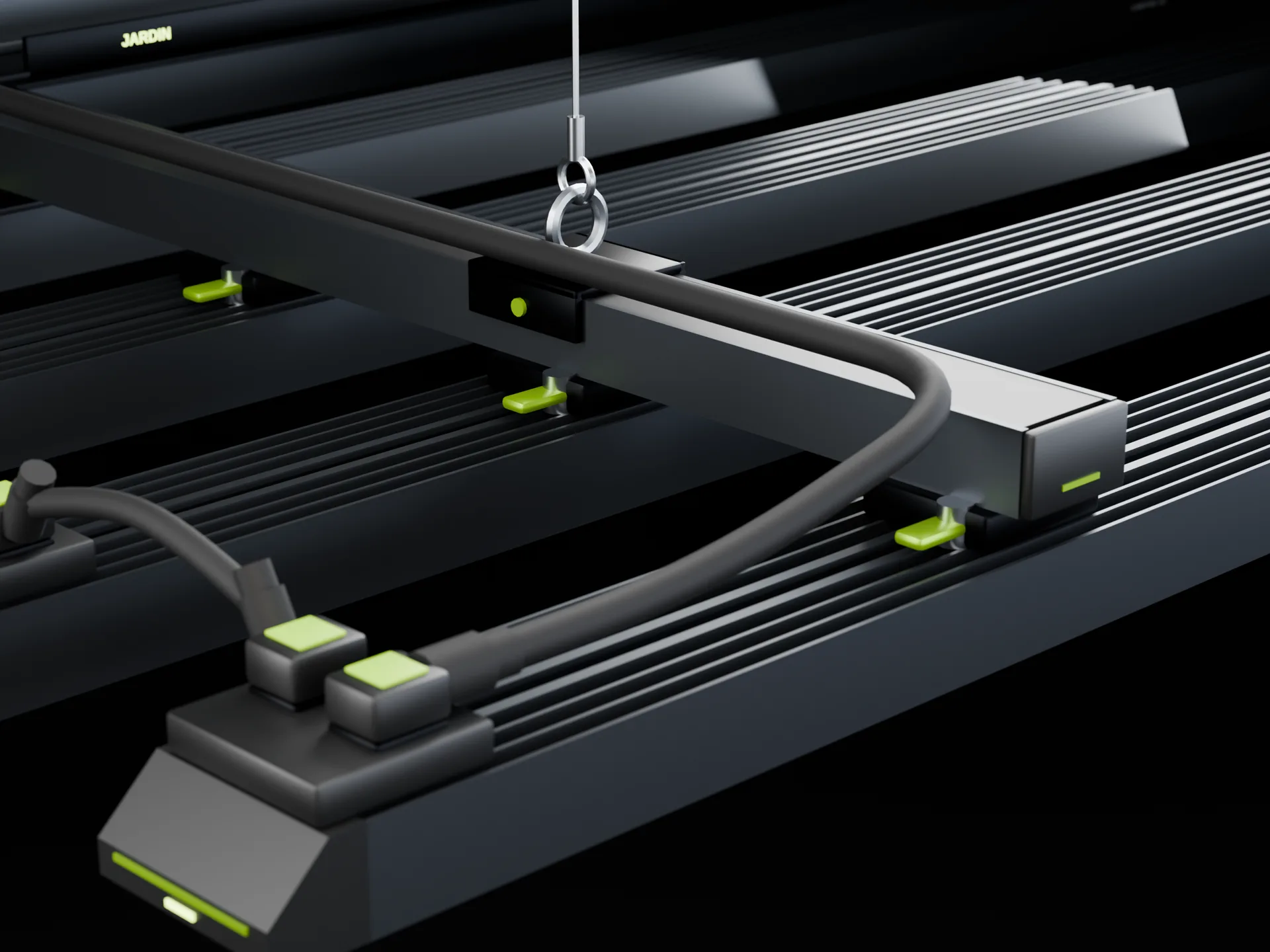
A passive bar with nothing cut into it
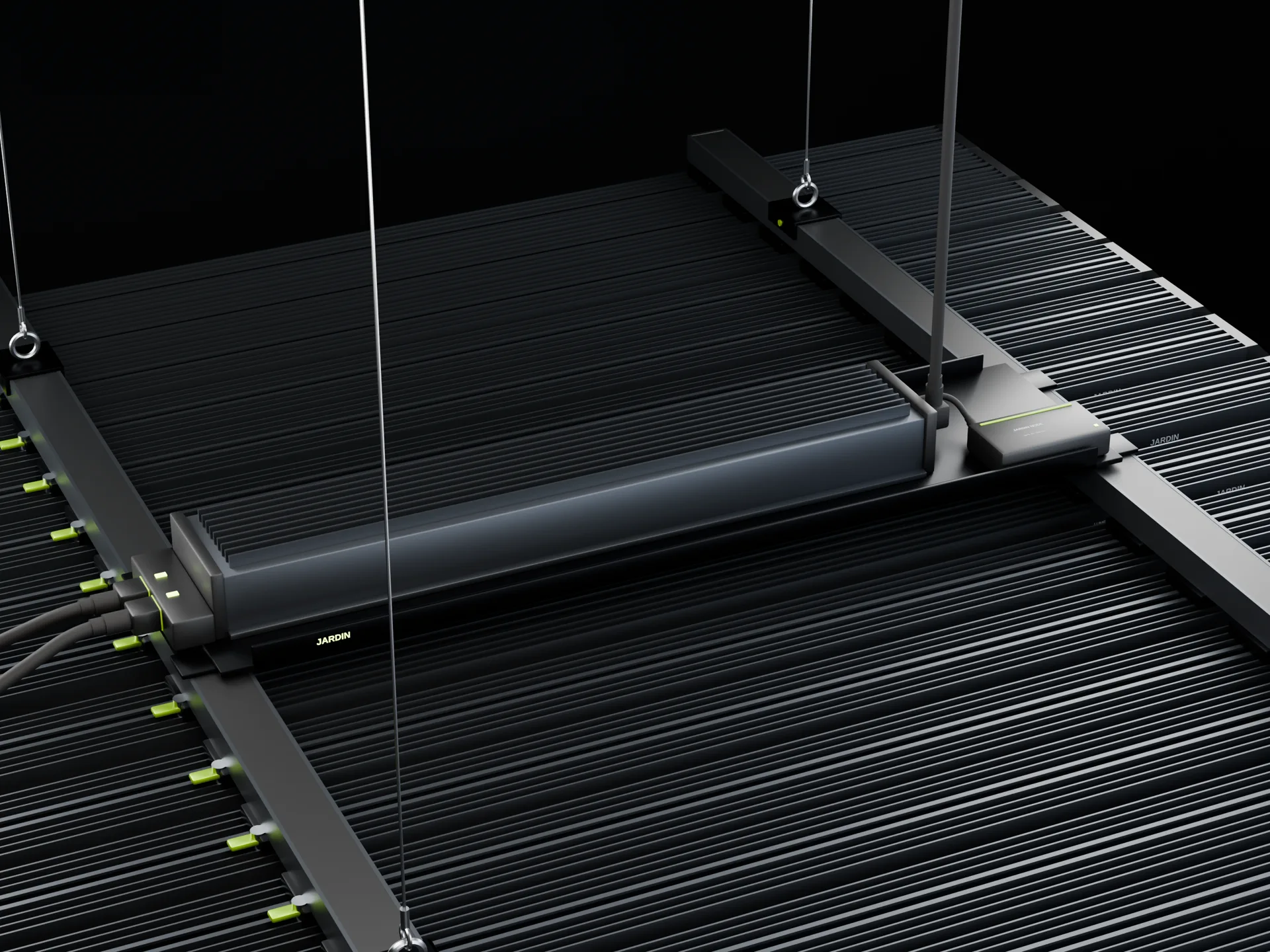
One extrusion with eight fins and a centre T-slot. The boards sit in a recess underneath, the connector block is part of the end cap, and the extrusion is only sawn to length.
02
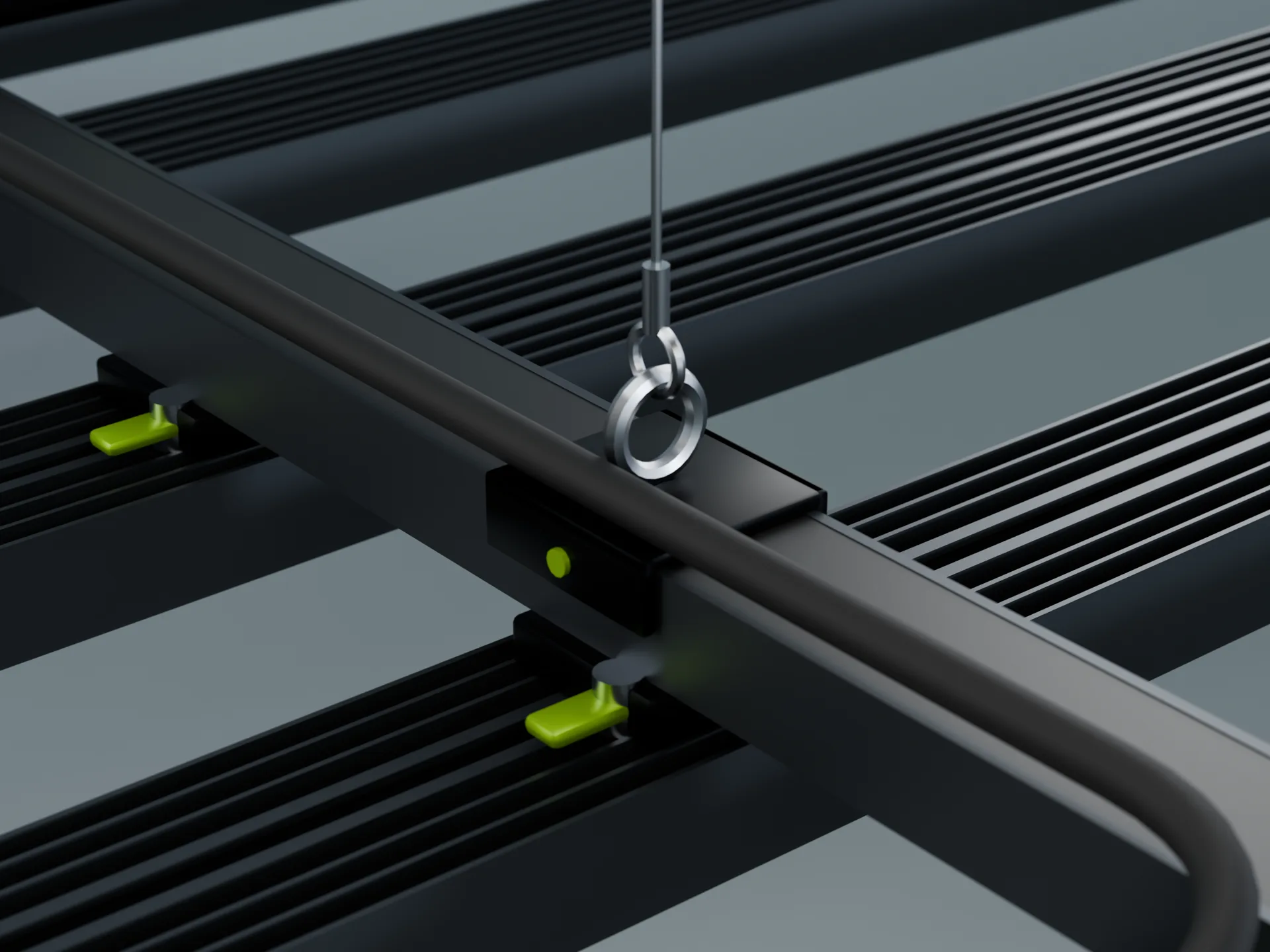
A quarter turn to add or move a bar
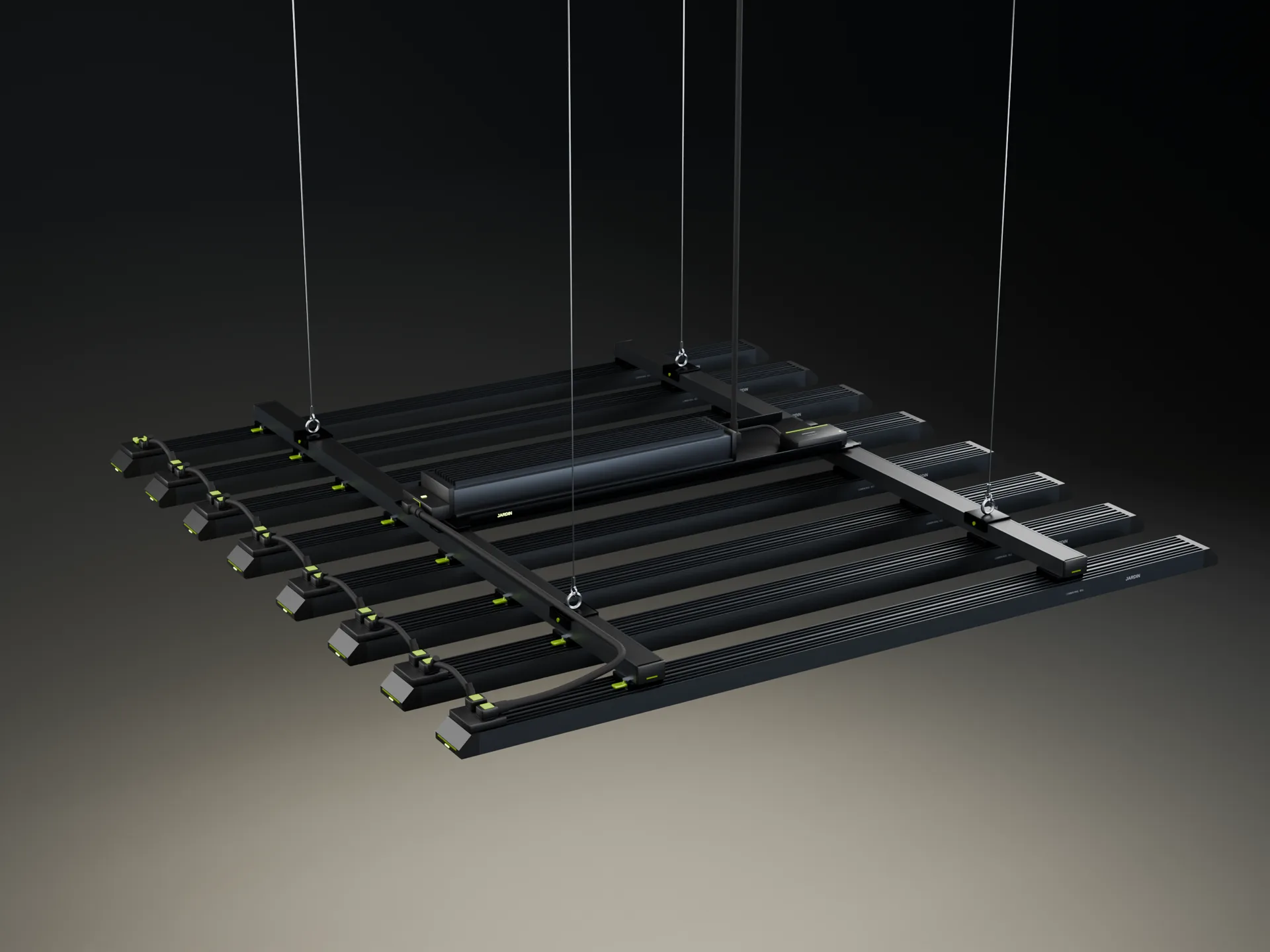
The saddle clamps the bar's slot to the rail's slot at any 5 mm station. No tools, no fixed holes.
03
One driver, right-sized
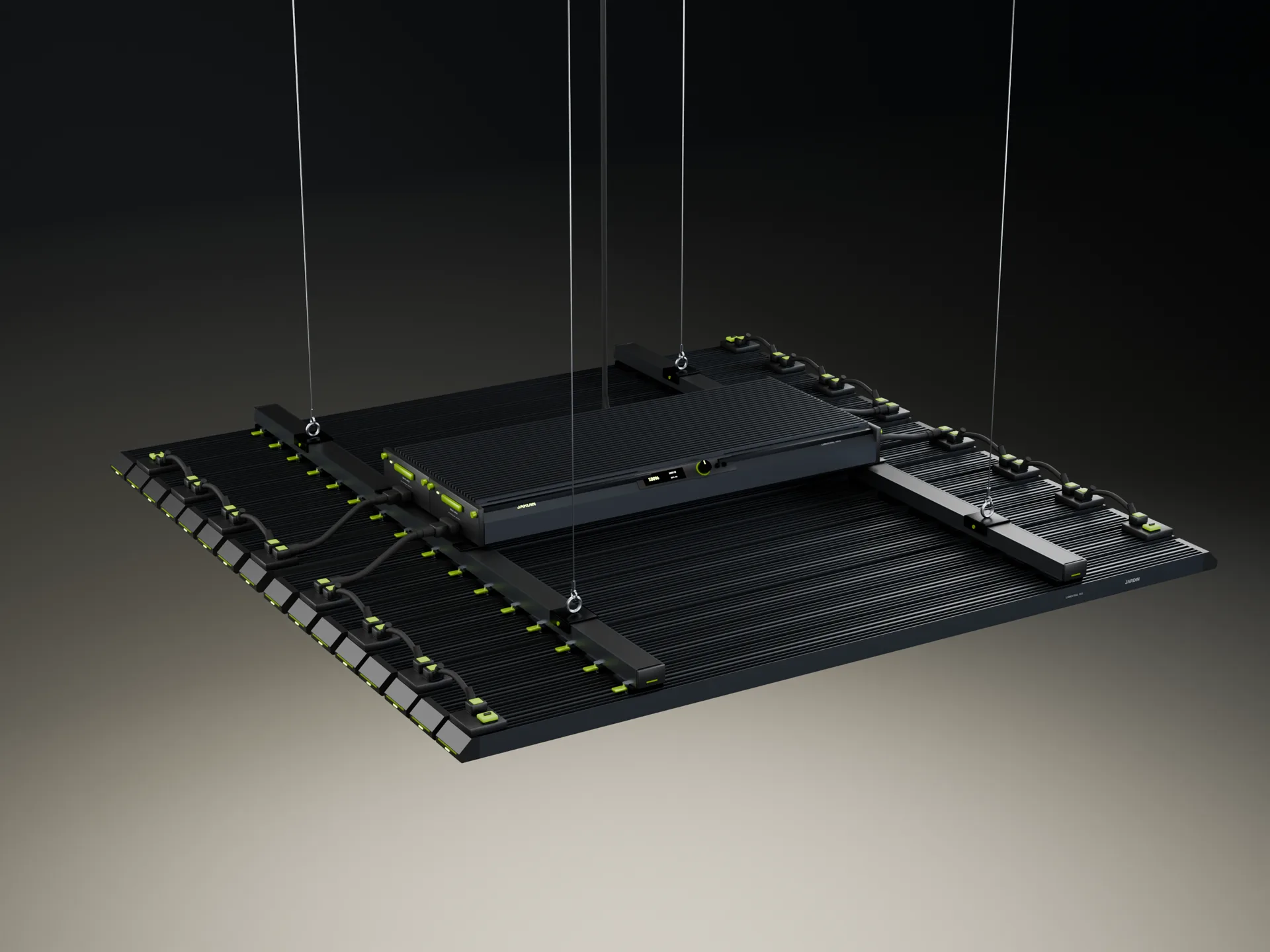
A single listed constant-power driver carries the whole light from a tray on the rails or from outside the tent. No stack of small drivers, no extra failure points.
04
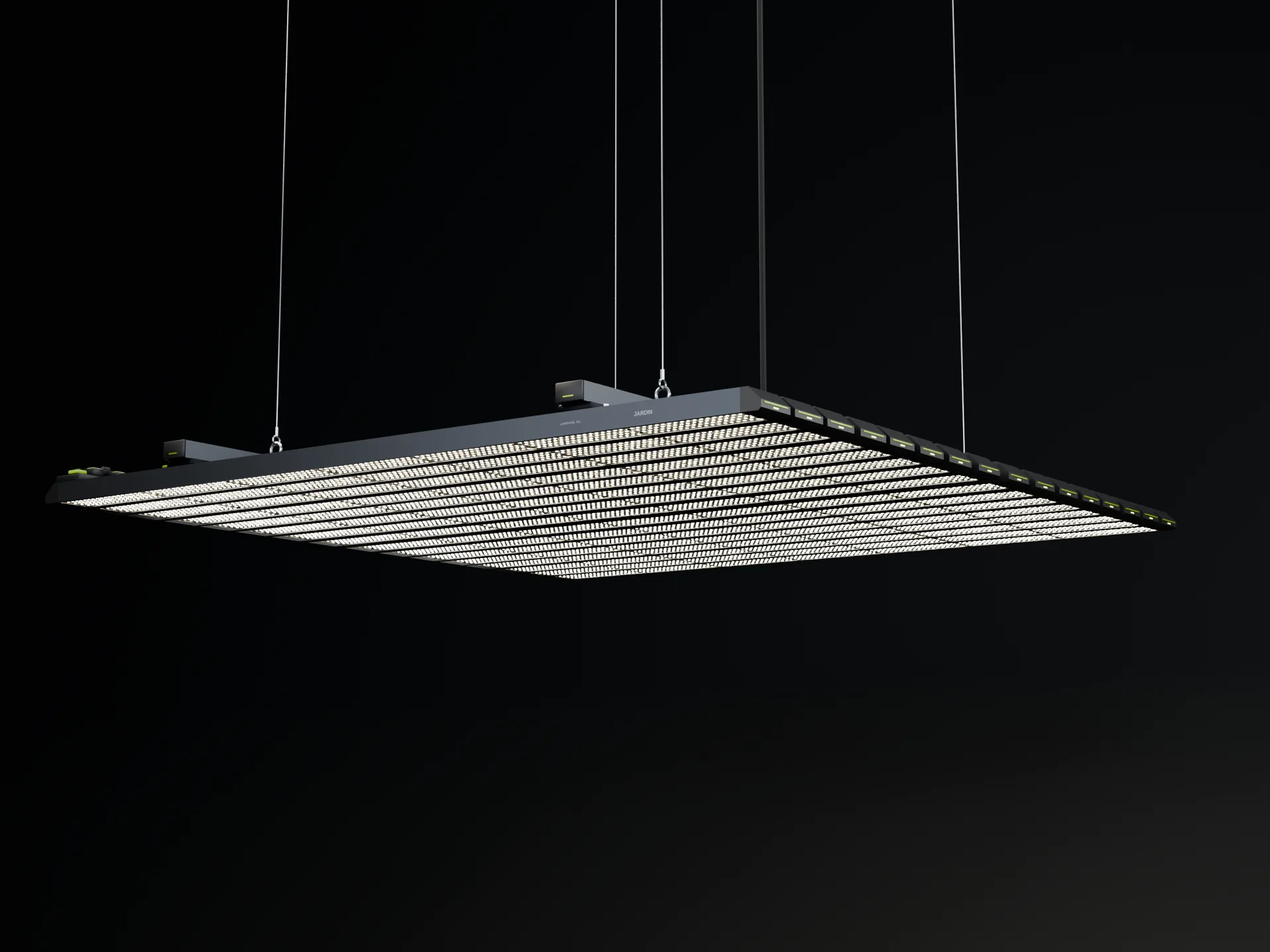
Dimmed by the app, never by mains
The wireless Light Node dims the driver through its isolated input. It never switches mains; the Jardin app sets schedules, sunrise and sunset.
05
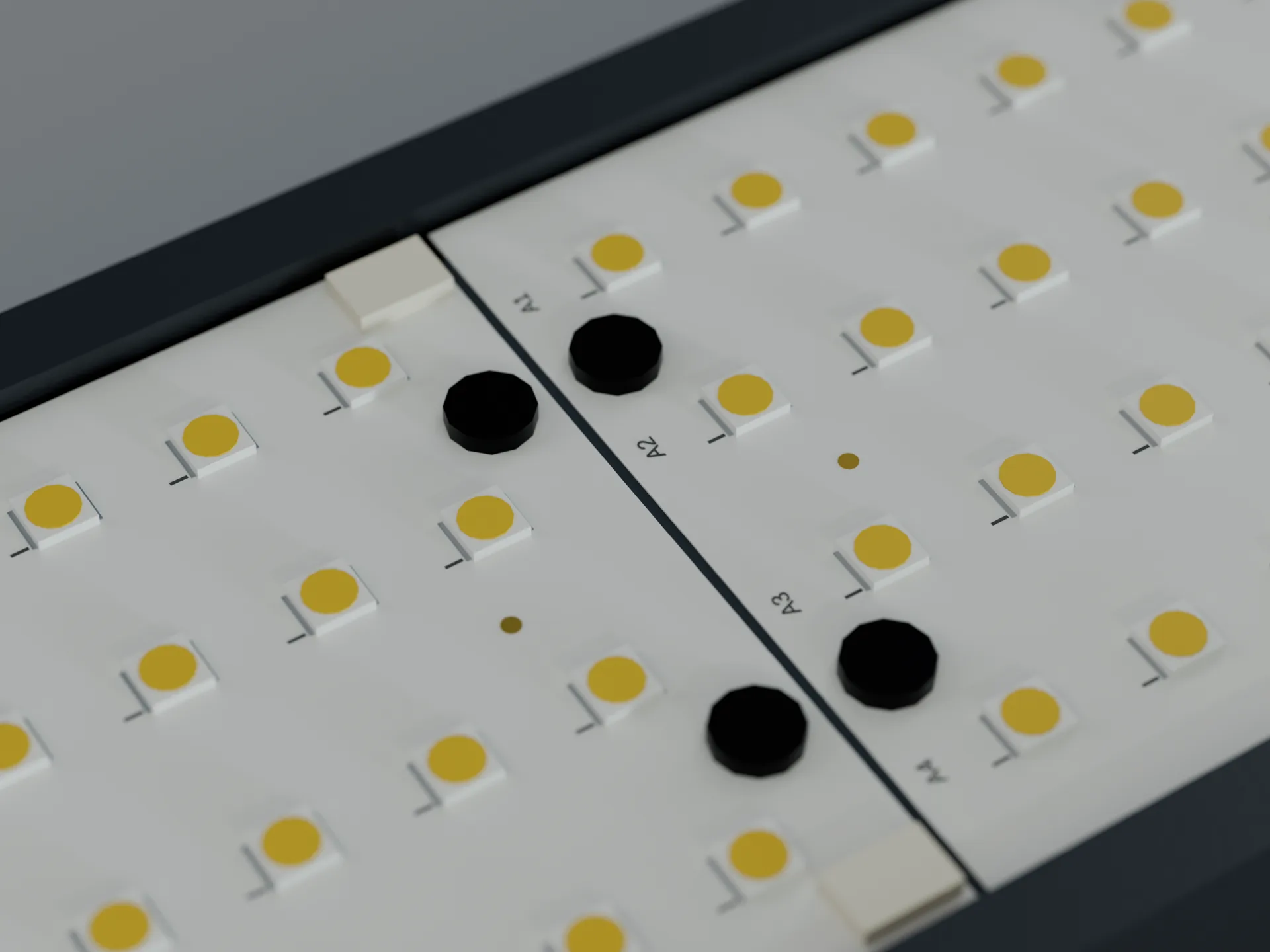
Boards you can replace
Two- and three-cell boards butt together inside the bar. A bad board is a board, not a light.
06
Sized for Jardin tents
Hanging points, cable ports and the driver's place outside the tent are drawn together with the tent itself.
Gallery · tap for full size
Look closer.
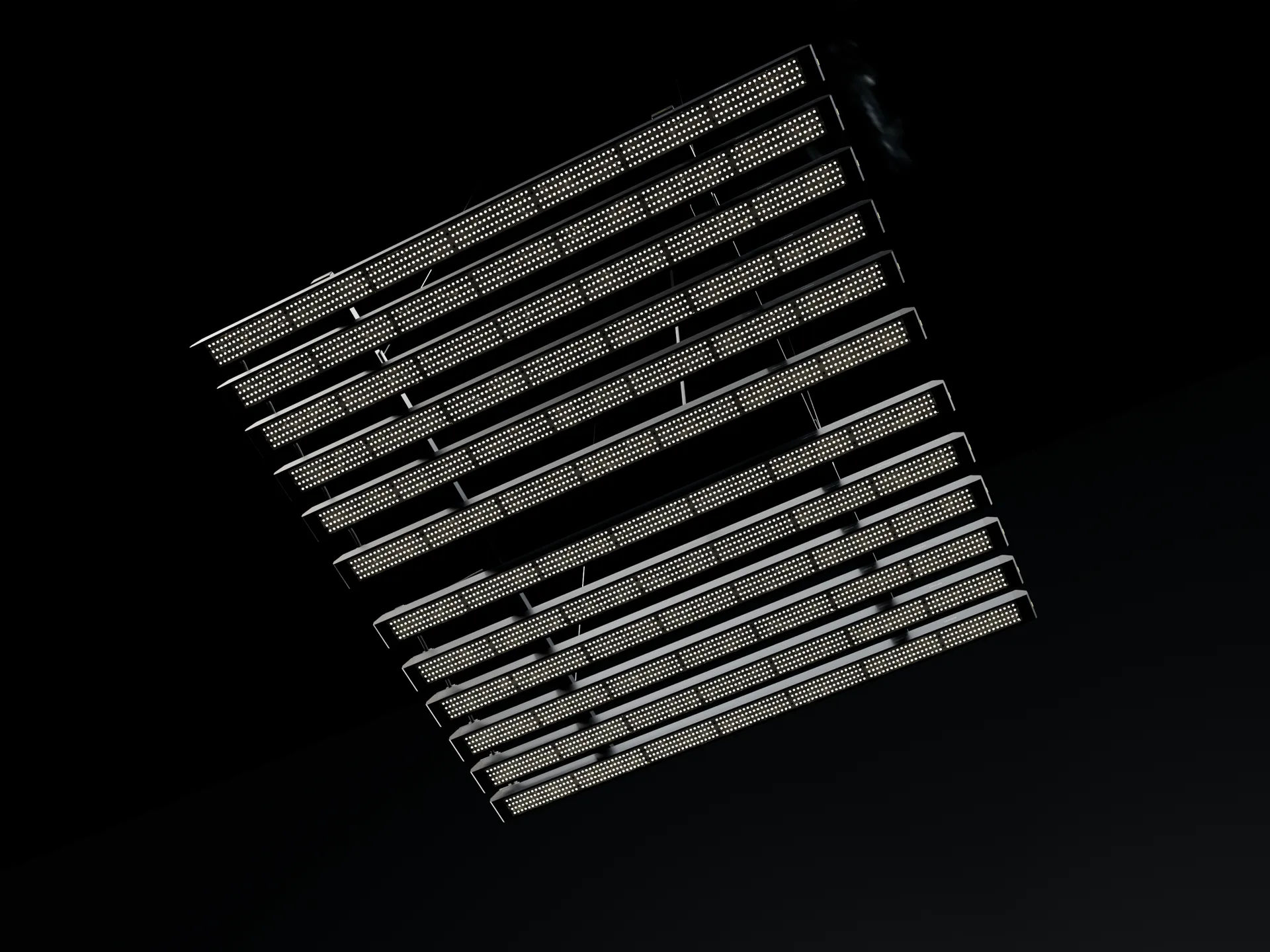
Every render whole, at its own shape. Concept art from the design files, not product photos.
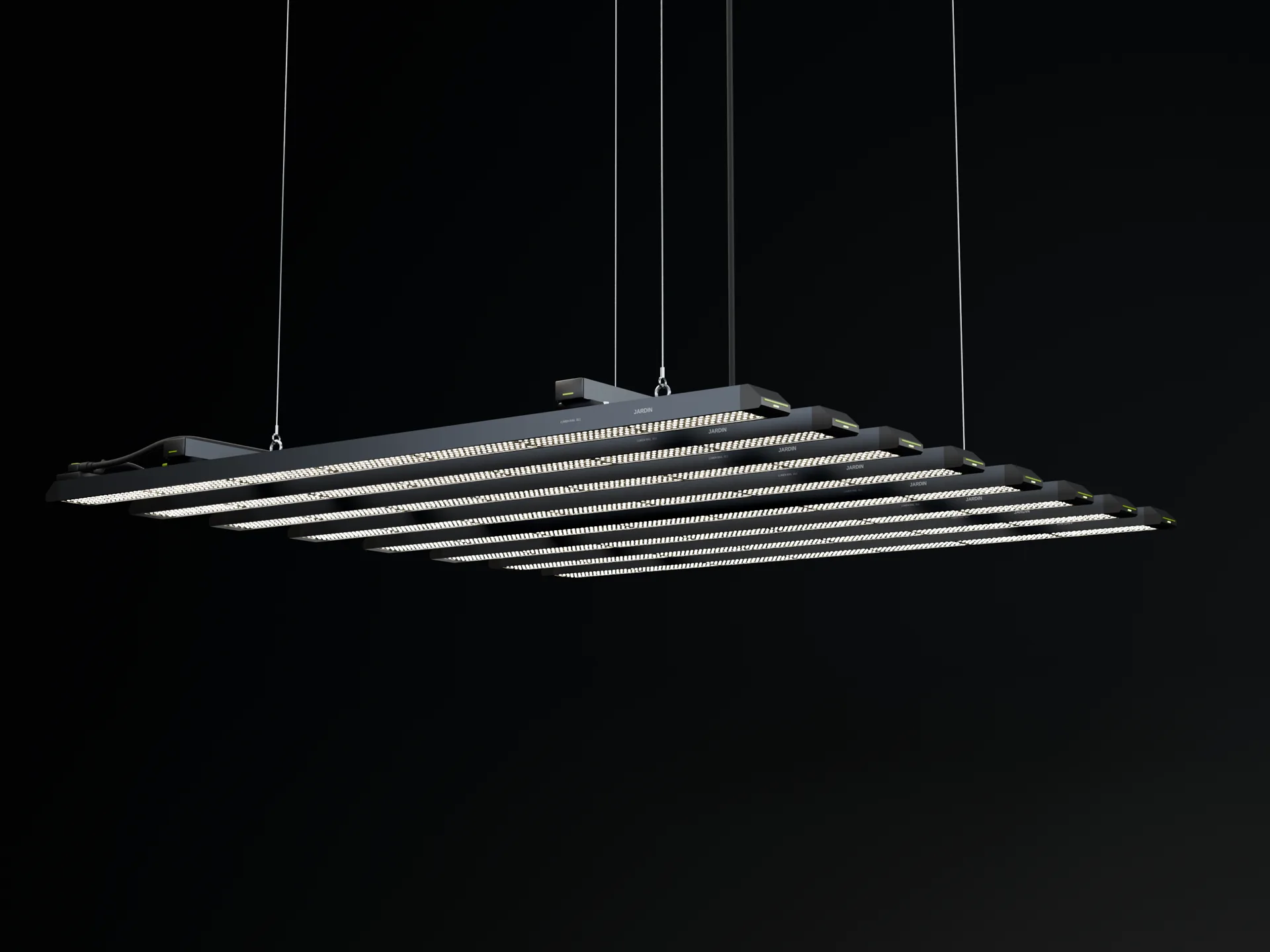
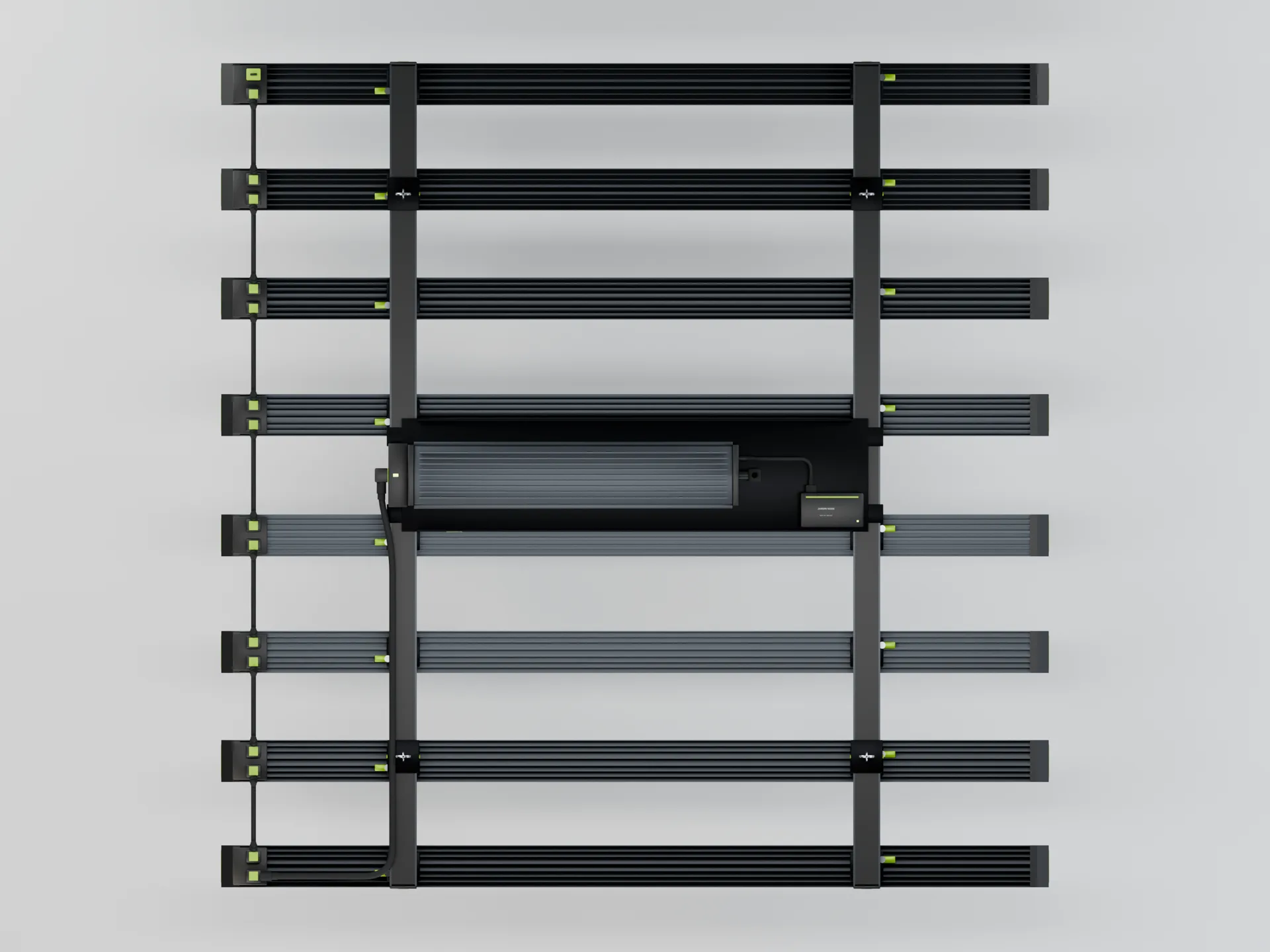
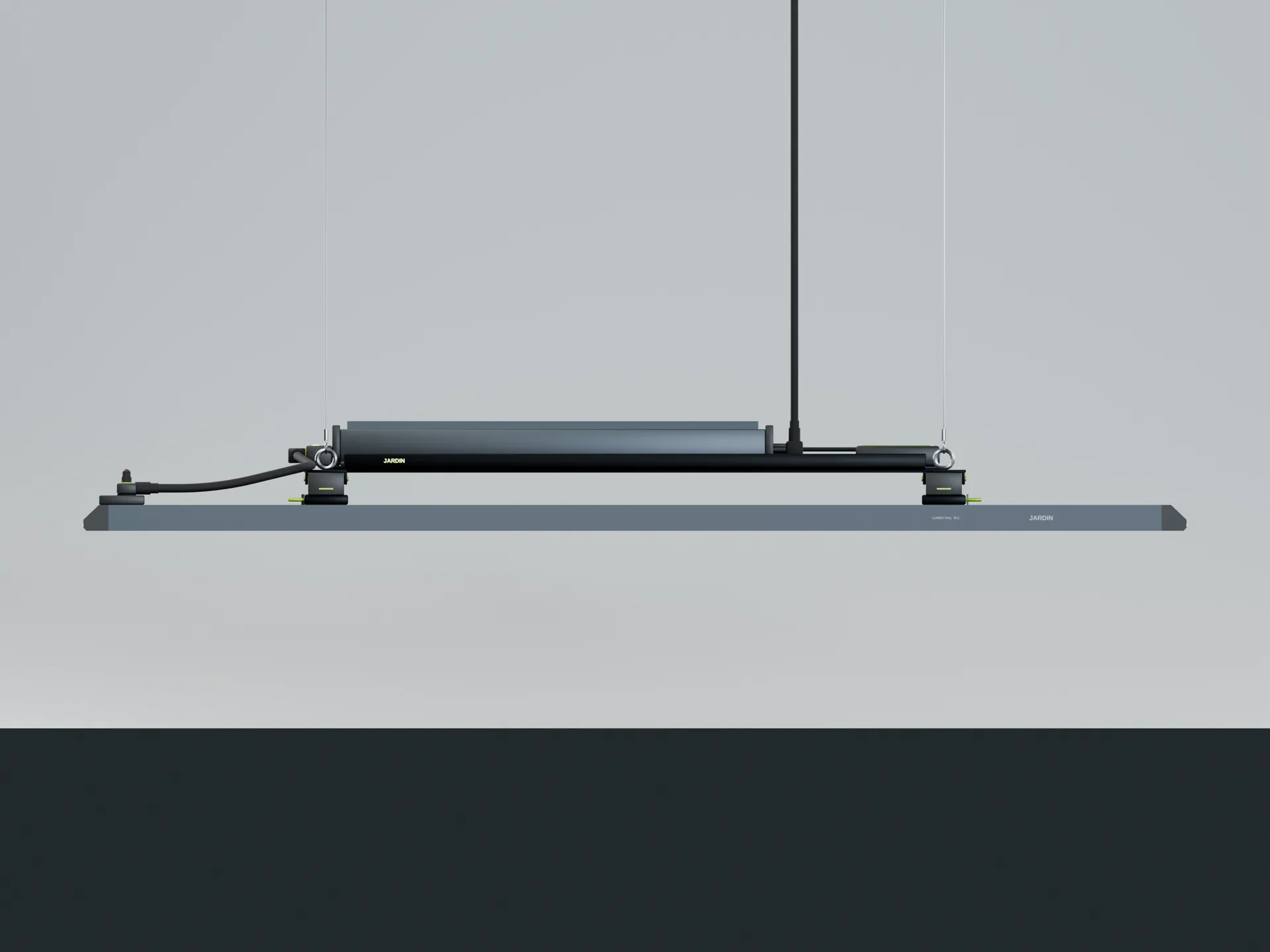
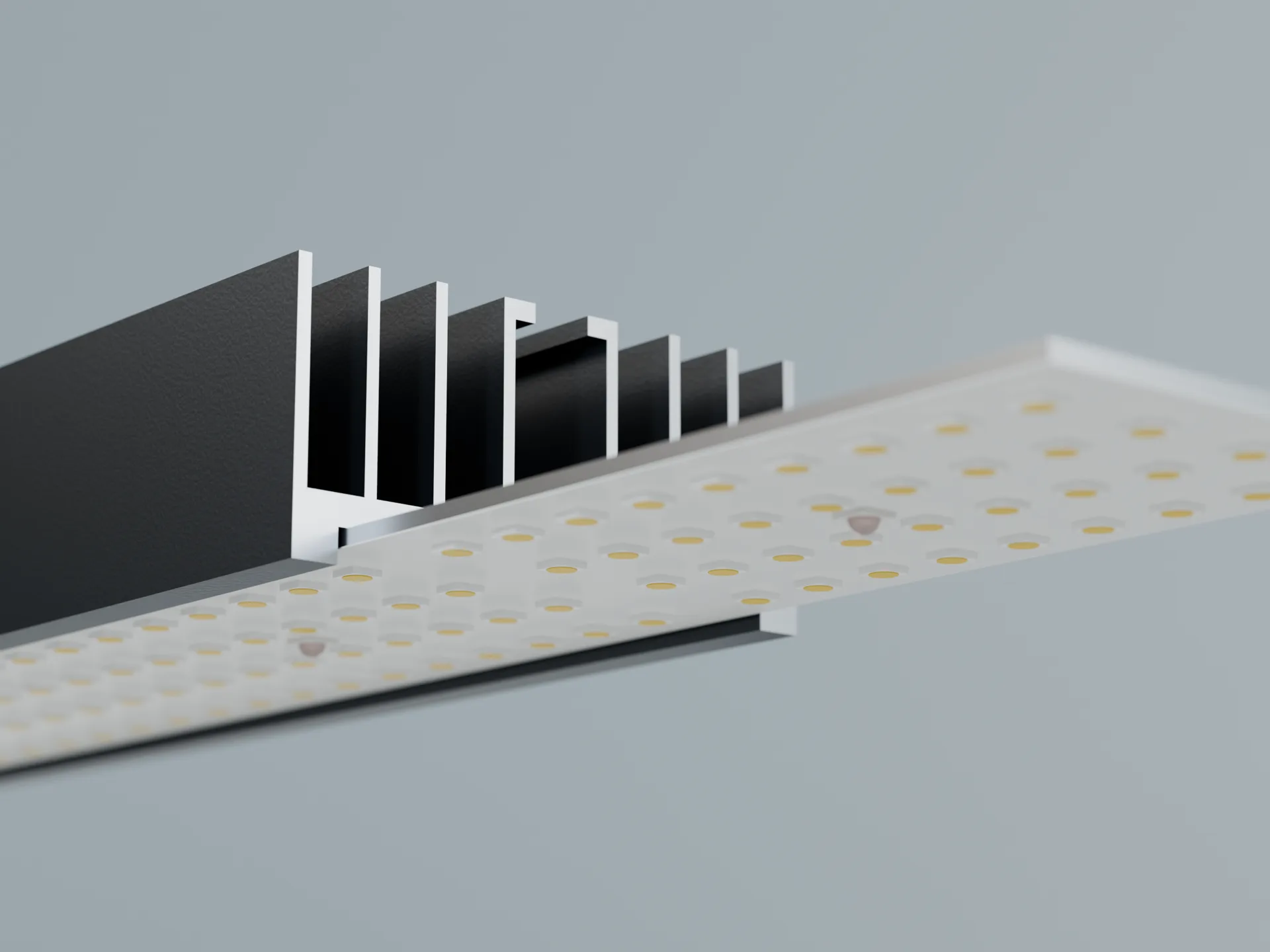
Specs · first-pass calculations Designed
The numbers, labelled for what they are.
Diode, driver and thermal figures come from the specified parts and their datasheets. The next deliverables are an integrating-sphere PPF and PPE, a PPFD map measured in a tent, and the safety listing.
What's done
- Fully engineered. Every bar, rail, saddle, board, lead and kit drawn and specified, down to its material and how it's made, with an electrical and thermal check for every kit.
- Every kit mapped. Every kit has a first-pass light map in a J-series tent at three hanging heights.
What the money buys
- A pilot run of 50 lights. Diodes and boards, the extrusion die, rails and saddles, drivers and nodes.
- Testing and listing. Sphere and map measurements, thermal tests, and the safety listing.
- Only if the goal and its reservations are met. If not, every deposit comes back.
Founding Members · first in line
Help take Lumen Rail from drawings to your tent.
Reserve on Fund the Bay with a refundable deposit, or join the waitlist to follow the build.